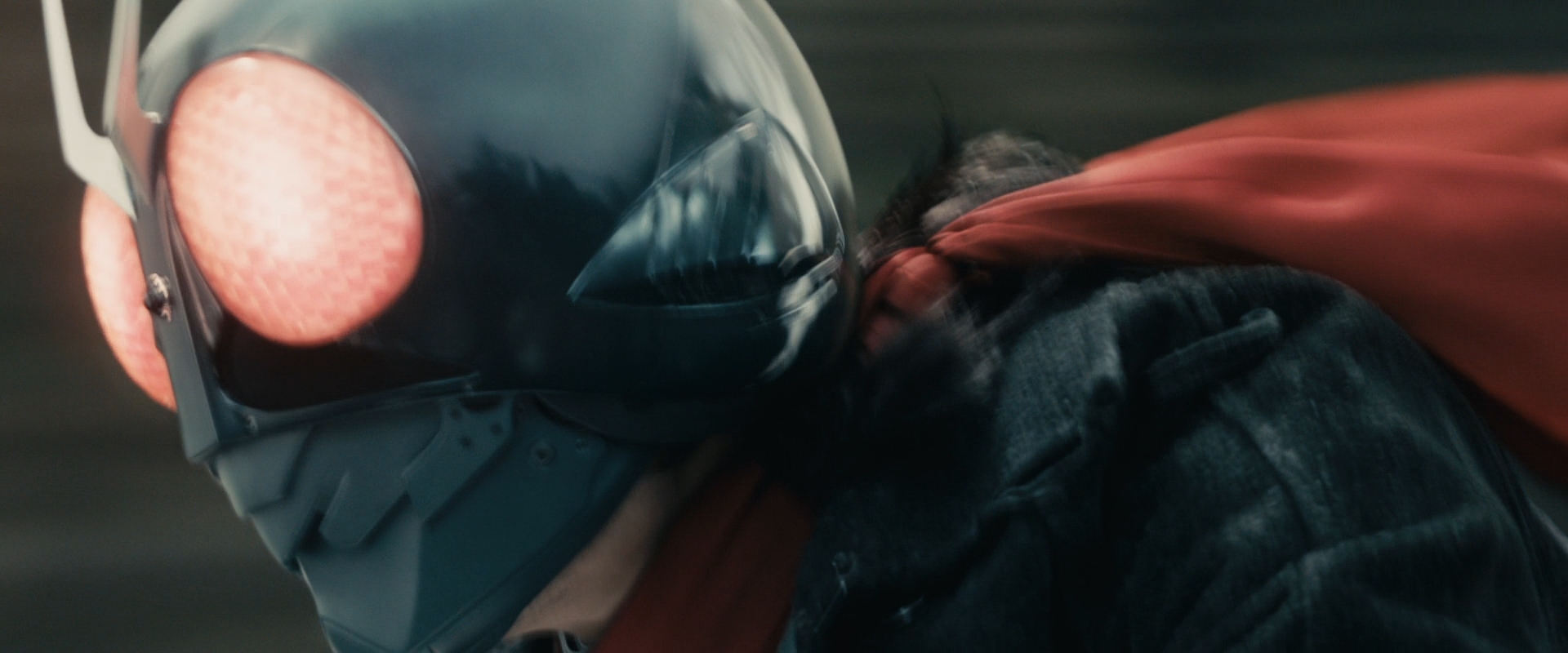
 Hideaki Anno’s been on something of a roll over the past few years. Not content with finally finishing his long gestating ‘re-imagining’ of Evangelion with the release of Evangelion 3.0+1.0: Thrice Upon a Time, he’s also found room to direct several live-action films that seek to update some of Japan’s most beloved cultural icons. 2016’s Shin Godzilla was a massive hit that raked in money and was widely acclaimed by critics both Japanese and worldwide as a smart, incisive update of the legendary monster for the modern age. It was followed in 2022 by Shin Ultraman (directed by Shinji Higuchi, but written and produced by Anno), which was another huge success but was also more critically divisive, with much debate over its near-slavish devotion to the original TV series.
That brings us to 2023 then, and Anno’s latest crack at the reboot & reinvention formula with Shin Kamen Rider, notably his first effort without the presence of co-writer/director Higuchi. Originally planned as a special release for the franchise’s milestone 50th anniversary in 2021, inevitable production delays from the pandemic fallout pushed it to a release date of March this year in Japanese cinemas. While a few locations outside Japan were lucky enough to score special screenings, for most of us the first chance to see the film came last week with the worldwide release onto Amazon Prime.
 All that preamble aside then, what exactly is Shin Kamen Rider? Well, like the previous ‘Shin’ films, this aims to be a ground-up retelling of the birth of the franchise, going back to the very beginning and drawing out the key details in an effort to produce a definitive origin story. For Kamen Rider that means a return to the 1971 television series and the story of Takeshi Hongo, a man kidnapped by the evil organization SHOCKER and transformed by science into a grasshopper-themed monster. Rescued before they have the chance to brainwash him into their service, Hongo chooses to use his powers to fight against his creators, and one motorbike and a snazzy scarf later, Kamen Rider is born. It’s an iconic origin and the film wisely doesn’t dwell on it too much, starting in medias res as we speed away with the newly liberated Hongo. One liberally gory fight later and Hongo and SHOCKER defector Ruriko Midorikawa begin their war against the organisation.
Structurally this movie is very odd, in pretty much exactly the same way Shin Ultraman was. That is to say it is fairly openly a series of TV episodes glued together and doesn’t really attempt to hide this fact. Hongo and Midorikawa hunt down a monster, foil its specific evil plot, then kick it until it turns into foam, and rinse and repeat. There’s a certain charm to the shamelessness of this presentation admittedly, but it also makes for a somewhat lumpy progression, particularly in the final half hour or so where we transition into all-original material. More than anything else, this structure speaks to Anno’s fierce fidelity to the original source material, or crucially, the version of the source material that has lived inside his head since he was a child. This allegiance to a long-remembered childhood vision of a story is all-encompassing and provides the film with much of its strength and many of its weaknesses. For better or worse you are never in doubt that you are seeing Hideaki Anno’s version of the story.
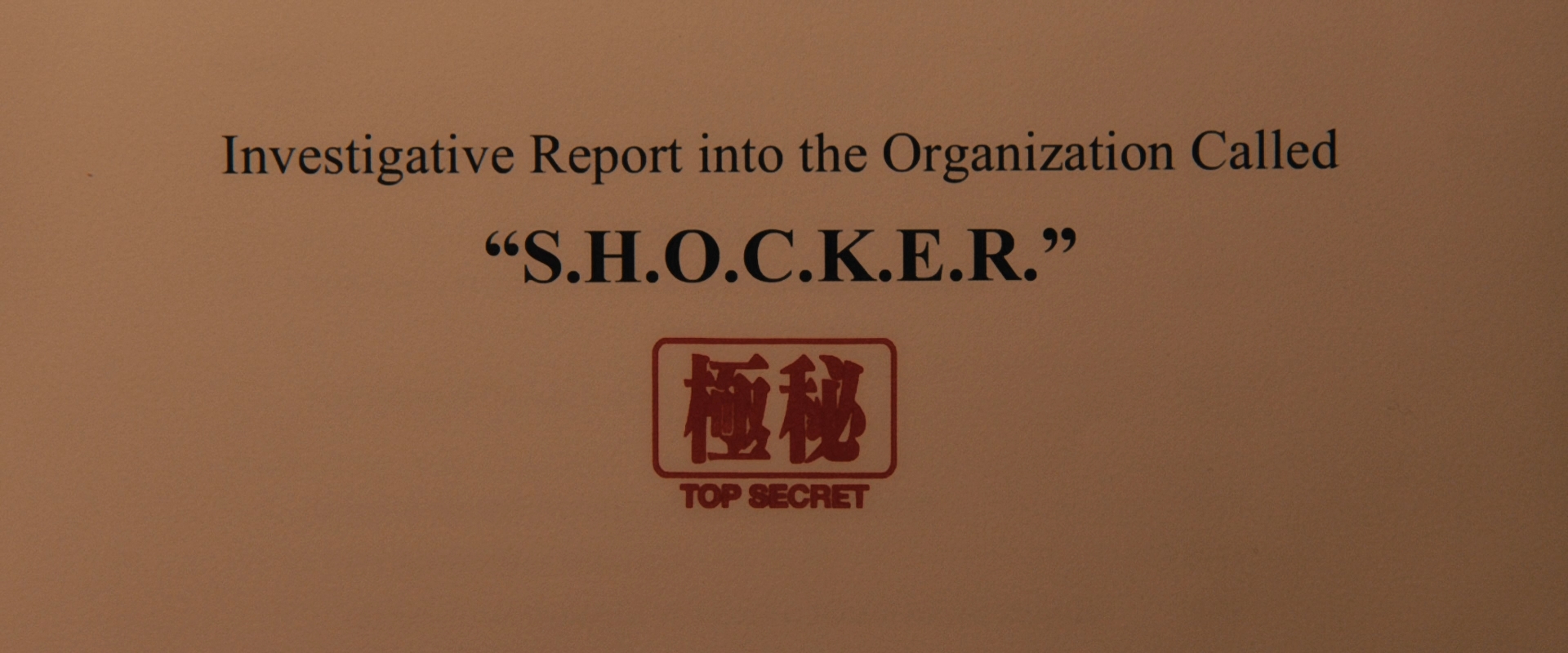 One of the major issues with the film is its tonality, for want of a better word. While original Kamen Rider occasionally dabbled in heady ideas about transhumanism, fascism, and comradeship, its first and foremost tone was almost always schlocky kids drama, complete with a thick layer of 70’s cheesiness. This reboot, by contrast is cold, brooding, and sparse almost to a fault. By cutting away much of the camp, Anno has succeeded in making a story which is more effective as a modern character drama, but which has also had much of the silly fun drained out of the premise. Shin Kamen Rider is rarely exciting or amusing, and lacks the punch-the-air exhilaration that the best examples of the genre can provide. So determined is the film to establish itself as Serious Business that even scenes that would benefit from a lighter touch, where the inherent goofiness of the scenario would work best with a more wry presentation, are played dead straight, and more than occasionally come off as uncomfortably po-faced.
That same coldness remains a problem when it comes to the characters themselves as well. We should probably acknowledge that Anno has never been a master of writing naturalistic characters – even in his best known works, his characters are often mouthpieces for viewpoints rather than fully rounded personalities, but that can be powerful when put in the right context. Here though, the plot revolves around the relationship between Hongo and Midorikawa and that relationship never fully convinces, despite the obvious best efforts of the two actors. The difficulty of conveying thoughts and feelings between people is one of the defining themes of Anno’s work, and one which he has returned to time and again, but it’s an awkward fit here and feels shoehorned into the material. There’s just not enough chemistry between the leads to get us involved in the relationship, and Midorikawa in particular feels more of an archetype than an actual human being. Even when Hayato Ichimonji turns up as Kamen Rider 2, his relationship with Hongo feels awkward and stilted, which in turn causes the last third of the film to hit less hard than you’d hope.
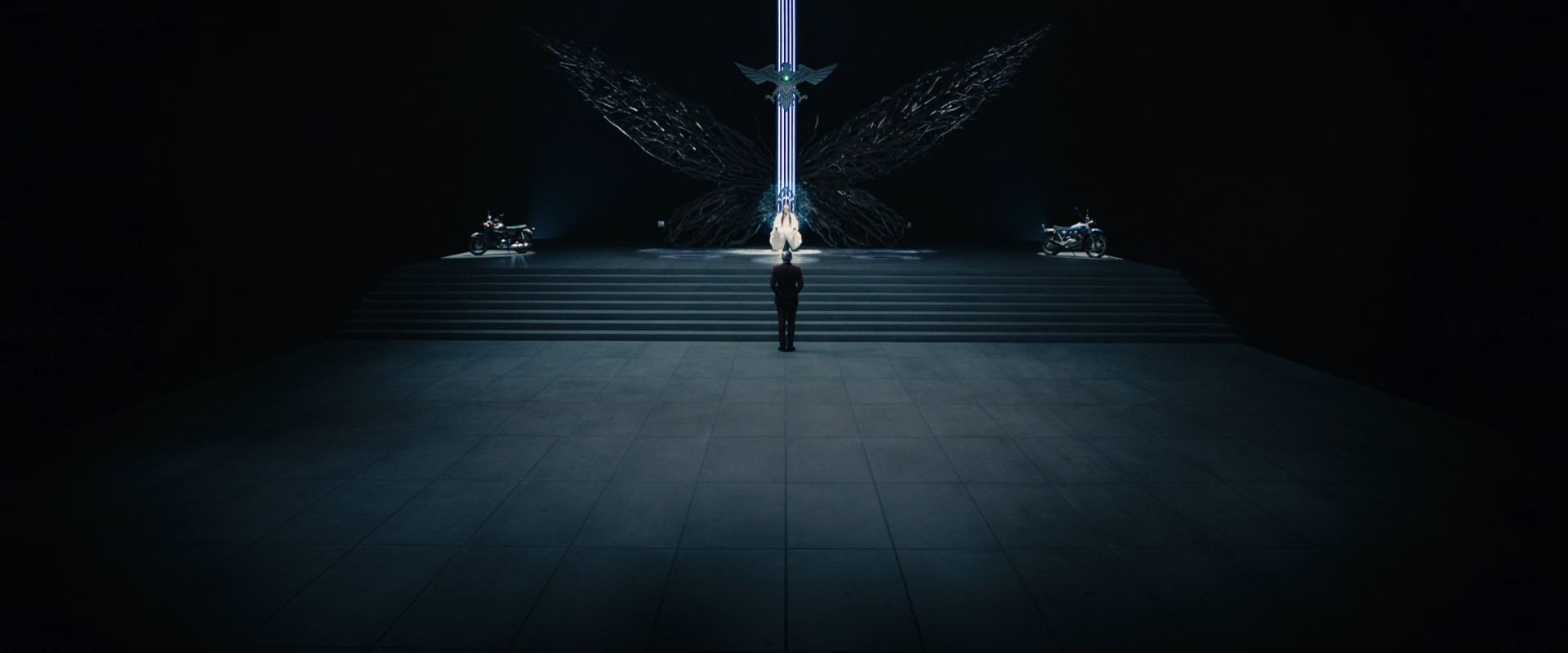
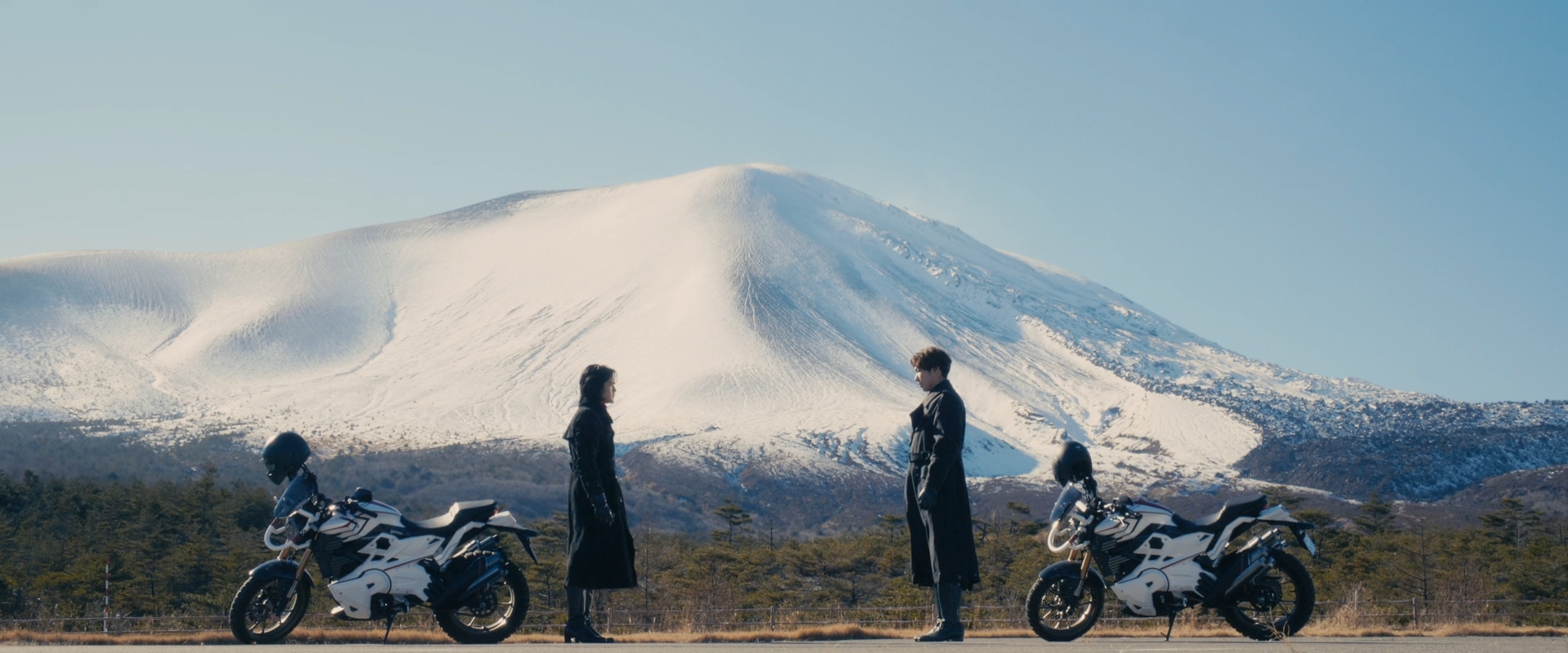 That’s especially frustrating because our lack of affection for the characters robs power from some of the movie’s more interesting ideas. The recasting of SHOCKER as an organisation dedicated to a misguided idea of human happiness is not super original, but it’s effective and dovetails well with the script’s increased focus on the internal battles of its cast. What Anno’s writing does do well is to elicit a certain sense of insularity and isolation in its brooding heroes, and that can lead to effective moments of pathos, particularly at the very end, which is one of the stronger parts of the film.
I do feel though that any Kamen Rider production has to deliver on the action front on some level and in that regard Shin sadly underperforms. The opening battles are fairly decent, liberally taking advantage of the increased violence and gore quotient, but as the fights increase in scope the choreography fails to keep pace. There’s a disappointing reliance on CGI for many of the later battles, which it’s hard not to see as a telling distaste for ‘corny’ practical effects. A late-stage multi-rider melee in an underground tunnel particularly stands out for the wrong reasons, being a confusing, sloppy, and poorly edited mess of an setpiece. Anno’s distinctive cinematography follows him over from Godzilla and Ultraman and the combination of unusual framing, extreme angles and imaginative camera moves adds a great deal of visual flair to non-action scenes, but also makes chases and fights occasionally baffling to follow.
 Where does that leave us then? In a slightly odd place, no doubt. For all that I’ve complained about the film, nobody could ever describe this as anything other than a loving tribute – Anno’s passion for the source material is clear, and shines forth from every knowing in-joke or visual tribute. However, that love is ultimately a straitjacket for the movie, trapping it in a space where the material is not allowed to bend enough to fit the storytelling style which its new director is more adept at. It’s hard not to conclude that Shin Kamen Rider would be a better experience if it were allowed to deviate more, to embrace its own identity and cut away the parts of the original show which didn’t fit. A comparison with the other major 50th anniversary project, Kamen Rider BLACK SUN, is telling – BLACK SUN’s smash-mouth storytelling style was far less faithful to the text of the original Kamen Rider Black, but by aggressively pruning and reshaping the mythos, the show became a much more modern, powerful production while still being recognisably Black. Shin Kamen Rider, on the other hand, is stuck firmly in the past. It’s a handsome, affectionate retelling of that past, but one which doesn’t move forward or have much new to say. For that reason alone it has to go down as a disappointment.
 Random Observations

- One of the slightly more out-there aspects of the film is the presence of another Ishinomori creation, Robot Detective K, who acts as a sort of neutral observer. There doesn’t appear to be any rationale to this inclusion beyond being a tribute to Ishinomori.
- Despite the considerably higher budget, long-time tokusatsu fans will recognise plenty of familiar locations from the TV shows.
- Shinya Tsukamoto, who plays Dr Midorikawa, is better known as an arthouse director whose films include the cyberpunk classic Tetsuo: The Iron Man.
- I have to mention the scene where, after a big emotional confession, Hongo randomly does a backflip. Just a great, goofy moment the film could do with more of.


 The Glorio Blog