
Recap (24-25):
Various disturbances plague Akibahara, and Shiroe traces everything back to one person: Nureha, an Adventurer who has taken over the western portion of Japan.
Iro’s Thoughts
I’m still unconvinced that this festival arc was the right thing to end the anime on, considering it’s just not terribly climactic (and in fact ends without really resolving any of the plot threads it starts), but the announcement of a second season on the horizon changes things. As such, the show can play it off as a prologue for Fall rather than as ending with a whimper. Log Horizon has always been able to get me excited for the next episode, and this is no exception.
Shiroe’s freakout at the slapshod nature of the attack on Akibahara was fun to see, particularly since he’s been perhaps too perfect at dealing with things until now, but it loses impact considering he summarily comes up with a plan to fix things. The idea that our hero is good at seeing and countering plans but bad at dealing with improvization is a good one, but it hardly ends up mattering in the end. That said, this time it’s less about a grand plan and more about Shiroe having friends who can help him when he needs it, which is a fitting enough element for a show with its roots in MMORPGs.

Nureha’s introduction is almost jarring, and her exposition-filled conversation with Shiroe is an unfortunate indicator of Log Horizon‘s light novel roots. A lot of new information is thrown around without much action to break it up, although there’s plenty of tension in the scene. Nureha is a pretty convincing femme fatale (fitting of her subclass, which is Courtesan) and she brings up some good points, albeit somewhat creepily. Shiroe buying the guild building dropped the hints that it might be possible to buy the Cathedral, and knowing Nureha has done so definitely paints her in a questionable light and brings up some weird ethics questions. Like practically everything anybody does in this show…
At any rate, even with the abuse of stock footage in the lead-out, I’m looking forward to seeing how things will develop in Log Horizon‘s second season. Fall can’t come fast enough.

Final Impressions
Iro’s Final Impressions
After my six month long love-hate-hate affair with covering Sword Art Online, I was immediately wary of any new show purporting to be about people who end up transported into a Massively Multiplayer Online Role Playing Game. When I learned it was originally written by Mamare Touno of Maoyuu Maou Yuusha (known for its logistical and economic take on typical fantasy), some of my apprehension was replaced with curiosity. I felt like SAO had practically covered everything there was to cover. Would Mamare’s take on MMOs be any different?
Yes, as it turns out. Log Horizon quickly distinguishes itself, despite those quick to label it a ripoff. While the main goal of SAO was ostensibly escaping the game and returning to reality, Log Horizon concerned itself with survival in the new reality. With no clear way to return home, the characters had to essentially make their own way in the world of Elder Tale. Conflicts were more sociological and economic than martial, and problems were solved through tense conversation more often than with a sword. Some of this was because many of the main characters were already at the level cap, which also gave them all a sense of backstory. The characters acted like longtime gaming veterans might if they actually were transported to a fantasy world they were all intimately familiar with.

Accordingly, I was struck the most by Log Horizon‘s worldbuilding, which had a great mix of both discovery and familiarity. With every piece of new information, more questions were raised in a way that kept the audience engaged. For example, I wondered about the capabilities of the other character classes in Elder Tale, not all of which are represented on camera. What skills do they have? What sorts of subclasses are there, and what sort of powers do they have? What combinations are most effective? These are questions that I would be asking myself if I were stepping into a new video game. Once that started to wear thin, the revelation about the game’s NPCs created a whole new dimension to the world, and the sudden leap into politics between them and the Adventurers was a welcome and fascinating narrative angle. Log Horizon ends up having a strong sense of verisimilitude with both actual MMOs and within the fictional Elder Tale, and my interest in the world only grew as the show progressed.
To keep things quick, Log Horizon was just plain good. It deftly avoids the pitfalls of other shows and adaptations, and the fundamentals of its storytelling are all strong. Never a week went by where I wasn’t excited for the next, and I never felt shortchanged or disappointed at the end of an episode. I liked the characters, the world was interesting, the narrative was consistent, the pacing was enjoyable, and overall watching the show just made me happy. Log Horizon is the best epic fantasy I’ve experienced in quite a while, and I’m all too willing to jump back into the database when the second season rolls around.
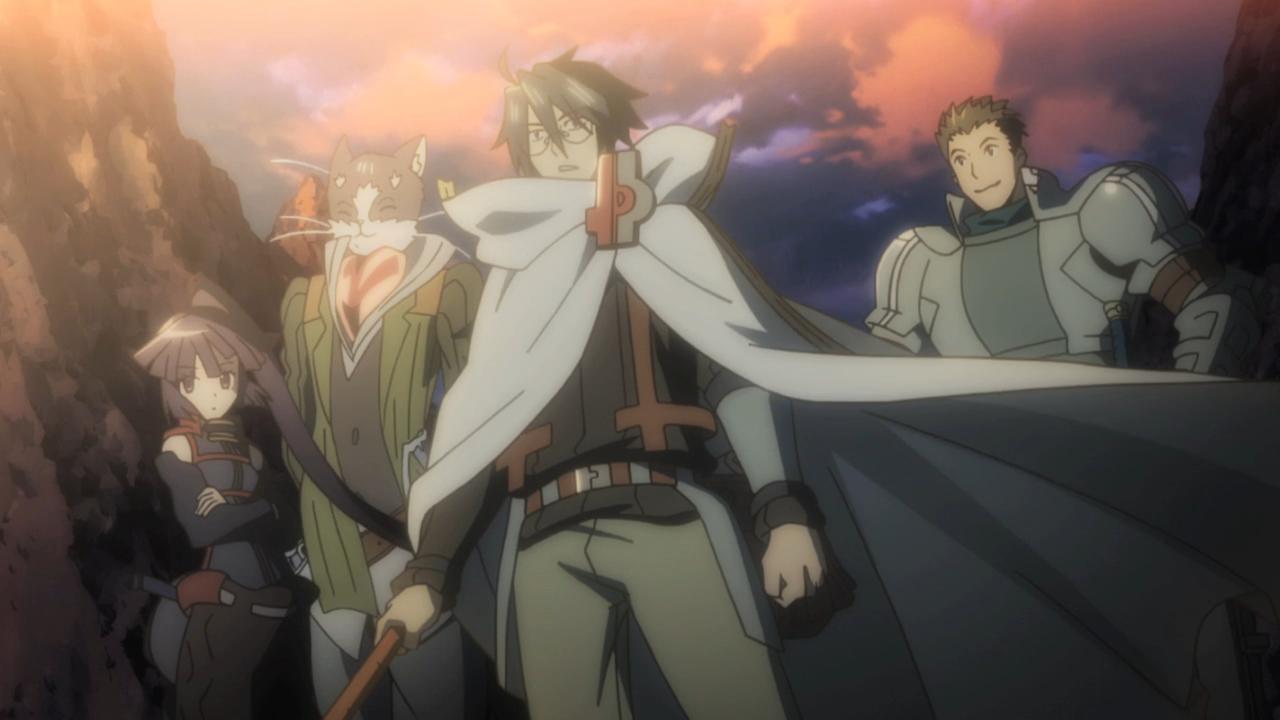
Gee’s Final Impressions
When I first heard about Log Horizon, there were only two things that had me interested. Firstly, the awesome OP. Secondly, the reputation of its author, Mamare Touno, general internet bro and creator of Maoyu Mao Yusha. That said, considering how forgettable the anime adaptation was compared to the manga adaptation, I wasn’t totally ready to buy in on reputation alone. So when I went into Log Horizon, my expectations were tempered. Lo and behold though, it easily ended up becoming one of my favorite anime of the year. With a genuinely interesting narrative, a great cast of likable characters, and some truly rock solid pacing, Log Horizon is probably one of the most competent shows I’ve watched in a while. While that might seem like an odd praise, I think it means a lot. Log Horizon does many things right, and as a result, plot threads and conflicts that would be tiring to watch otherwise, are made engaging to watch. Never once did I feel like Log Horizon was wasting its episodes on redundant filler, even as its last few episodes seemed like a poor way to end the anime. Thankfully, with the announcement of a second season, we can rest easy knowing that just like all the episodes before it, the final episodes of the first season act as a perfect jumping point to get fans excited for whats to come. Looks like this Fall, I’ll have at least one show to look forward to.
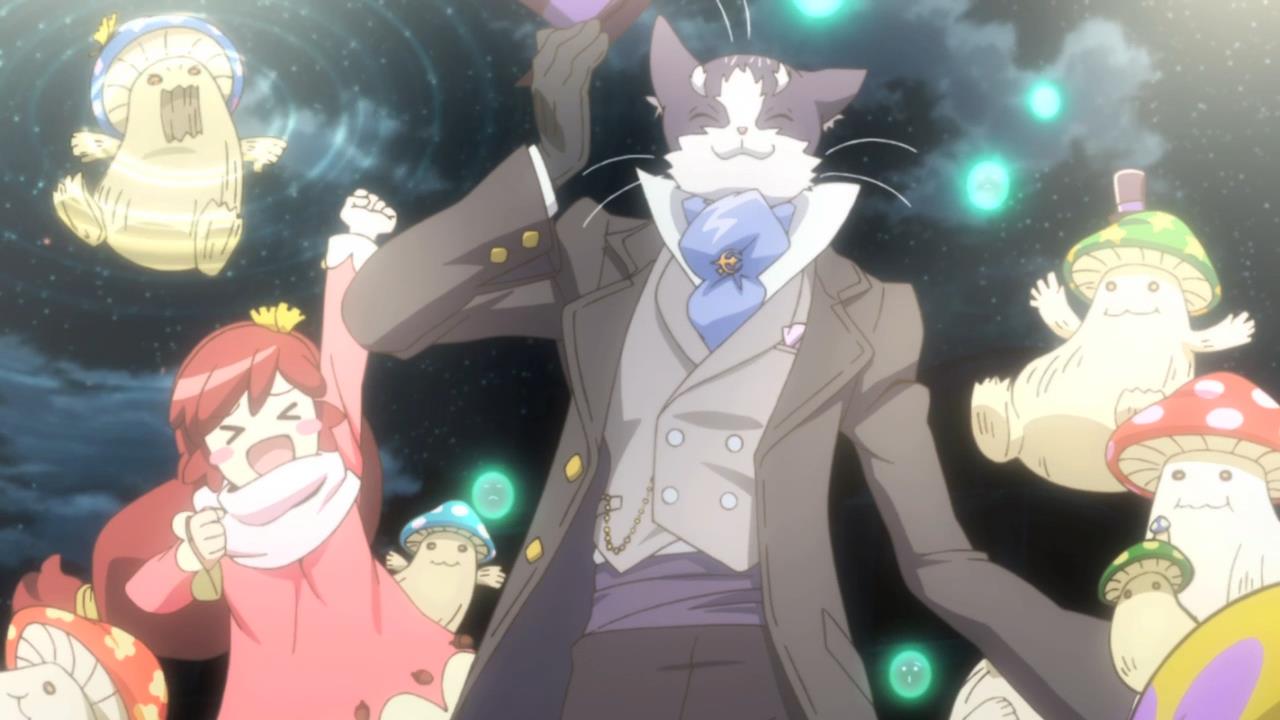
Marlin’s Final Impressions
I didn’t really know what to expect going into Log Horizon. I tend to give every show a shot, and hearing the similar themes from SAO I was not optimistic about starting another MMO show. Thankfully, my fears were nearly immediately assuaged as Log Horizon quickly showed the strength of its world building. I was enraptured by the idea of the characters slowly feeling out the rules in a strange yet familiar environment. I loved it even more when it had its characters go beyond just testing the rules and going on to see if they could be broken.
The writing was fantastic outside of just its setting. While the humor was a bit hit or miss, the relationships between the characters was the real meat of the story. Shiroe was a great main character, powerful enough to lead on his own, but also a person that knew when others would be more suited to the task at hand. This made the later development in the goblin war a real treat as he was able to integrate everyone’s abilities into his plan. A well rounded supporting cast made believing in the competence of our heroes easy as they continuously showed their various talents in battle and in diplomacy. While it was far from perfect, Log Horizon was an incredibly enjoyable fantasy adventure, one I will look forward to returning to.

Lifesong’s Final Impressions
Log Horizon provided an interesting new spin on the now genre of characters trapped in an MMO. Instead of playing a game, the game itself became reality. In truth the concept was neat to watch unfold and that is what Log Horizon spent most of its time on. Unfolding and explaining how the world is now real and the once NPCs are now people. The approach to storytelling was slow as it focused on character interaction. Log Horizon managed to weave a story of epic fantasy greater that I expected at first glance. The way the pacing developed was both a strength and a weakness. If you are looking for a story with a strong emphasis on character interaction and politics, Log Horizon is worth watching.

 The Glorio Blog
I echo the sentiments. Outstanding show through and through, and superior in storytelling beyond the MMORPG genre setting. Reminds me a lot of Spice and Wolf and Maoyuu Maoh Yuusha rather than Sword Art Online, especially when intertwined with the use of economic manoeuvring to achieve objectives. Definitely on my watch list come autumn.