Let’s start with an acknowledgement – art is inherently subjective. Not to blow your minds here, but we all react to works of art in different ways, and they all speak to us in very particular tones that can vary hugely from person to person. Therefore, it’s not really possible to definitively and mathematically declare any work of art ‘the greatest X ever’, no matter what the baying masses on Twitter tell you. With that said, every medium does eventually, over time and through a process of mass consensus, tend to come up with a few examples of the craft which are easy go-to citations for the greatest in their field. So if you poll a bunch of people about the best movie ever, you’re more than likely to hear Citizen Kane come up a few times. There aren’t too many ‘Best Album Ever’ lists which have the gall to exclude Sergeant Pepper’s Lonely Hearts Club Band. And so on and so forth.
For a long, long time, if anyone asked you what the best game ever made was, there was an easy and unambiguous answer – of course it was The Legend of Zelda: Ocarina of Time.
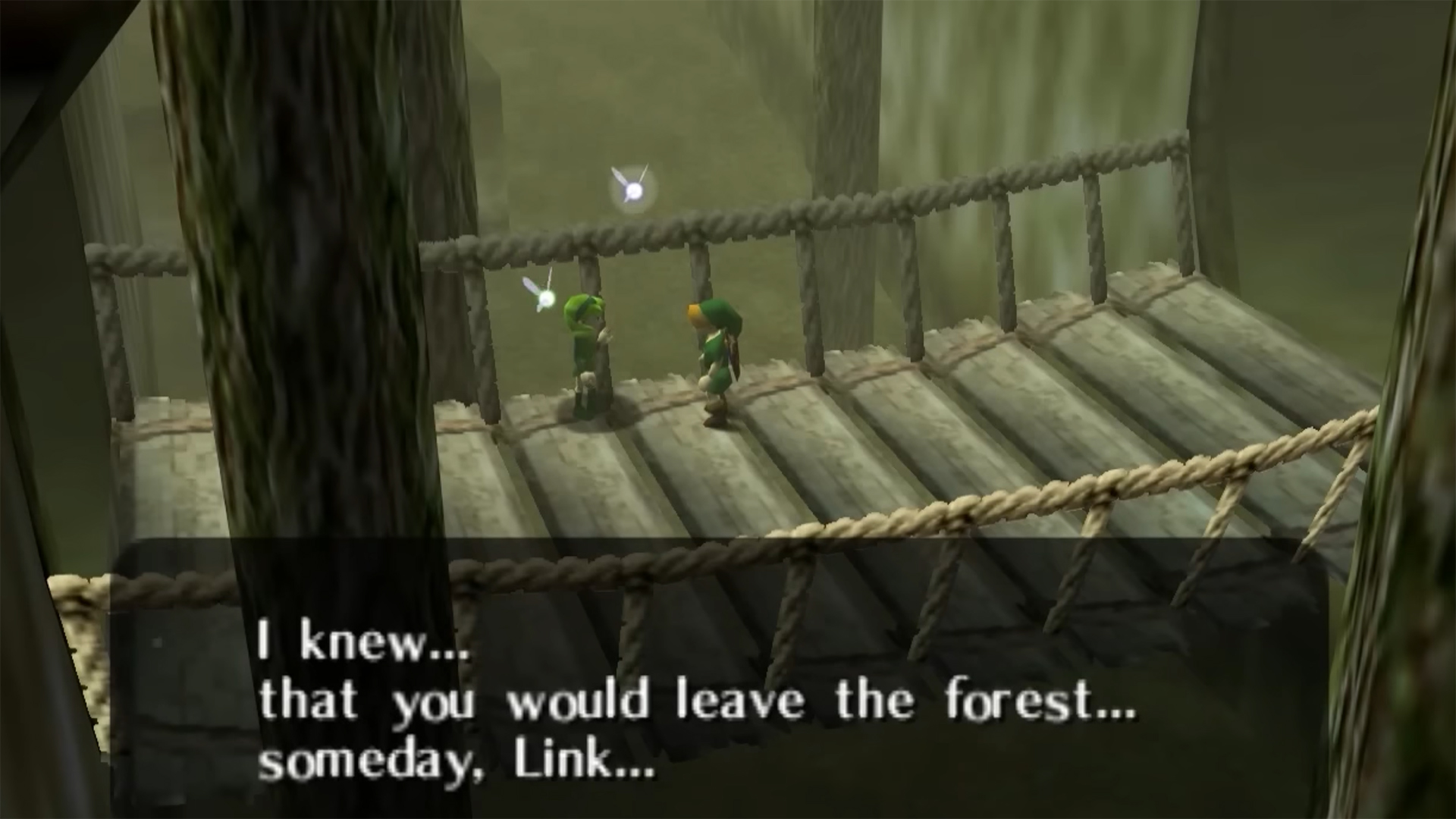
“Saria will always be…your friend…”
It’s very hard to convey, in a world where anyone can be a public critic at the touch of a button, where ‘game critique’ has become a massive industry spanning multiple forms of media, and where contrarianism has become its own end, how universally ecstatic the response was to Ocarina of Time was when it released on this day 25 years ago, November 21st 1998 (at least in the USA and Japan – Europe and Australia would have to wait another month). There are some remnants that can be pieced together to hint at the response – Ocarina of Time remains to this day, for example, the highest ranked game ever listed on review aggregator Metacritic. It’s unlikely to ever be toppled from that spot, given how much wider and deeper the pool of critics is these days. What’s even more extraordinary is that this reaction came after years of relentless, wearying hype, both from Nintendo itself and from dedicated fans, promising the game would be the greatest thing since sliced bread. That it not only met such huge expectations but handily exceeded them speaks to the incredible craft that the development team put into the finished product, but also to the boundaries it pushed. Like its N64 stablemate and ‘brother’ Super Mario 64 (which lent a heavily customized version of its engine to the newer game), Ocarina of Time redefined the language of 3D game design, leaving lasting echoes which persist all the way to the present day.
Thing is you probably already knew all of this – Ocarina of Time is also one of the most written about games ever, with countless articles, essays and interviews seeking to dissect it and uncover the truth behind its greatness. Far more skilled people than I have tried to break down its structure and mechanics and explain the thousands of keen design choices which lead to such an end product. To me though, Ocarina of Time represents something more personal, more intimate than that, and to explain one facet of its greatness I’m going to try and express why.
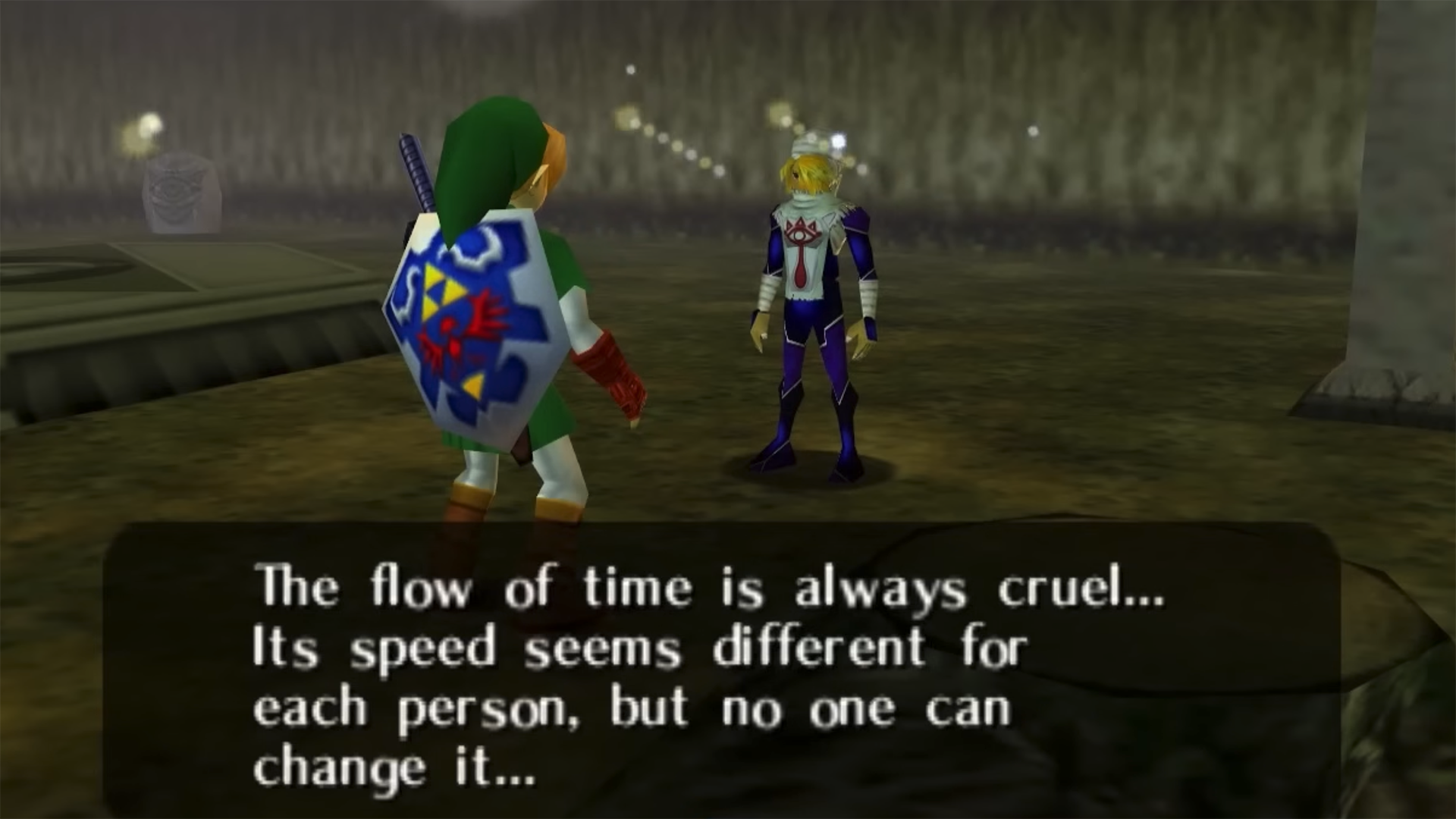
“A thing which doesn’t change with time is a memory of younger days…”
In 1998 I was ten years old, which dare I say is probably the perfect age to be introduced to The Legend of Zelda. I was also a deeply unhappy child, isolated at school and under pressure at home, a child who had a tendency to retreat into the wondrous worlds of fiction, and most prominently fantasy fiction. I was already a few years removed from reading the entire Lord of the Rings trilogy and was eagerly delving through a hodgepodge of sword and sorcery novels, from Brian Jacques’s pastoral Redwall series to C.S. Lewis’s classic Narnia books. Strict parents also meant no games consoles in the house, so my gaming experience was largely limited to whatever I could get running on my Dad’s ageing 486 work PC (mostly Lucasarts adventure games and other point-and-click experiences). Console time was a rare treat mostly experienced over at other kids’ houses. I first saw Ocarina of Time at my piano teacher’s home – she’d teach both my brother and I, and when my brother was being taught I’d hang out with her son, who was the only child I knew lucky enough to have both a PlayStation AND a Nintendo 64. Fortunately he was kind enough to let me play what I wanted in those brief half-hours.
I was drawn to Ocarina of Time both because of my liking for fantasy and also because of the weight of its name, which I had seen proclaimed reverently in the dog-eared games magazines I read at the local library. But what kept me captivated once I started playing was nothing more or less than the game itself. It can be hard to believe by modern standards, but I still remember those first steps into Kokiri Village, an environment full of richness and wonder, glimmers and motes of dust hanging in the air, Koji Kondo’s unforgettable music providing a jaunty backdrop. Kokiri Village is a remarkable example of Ocarina of Time‘s terrific multi-faceted design, at once an introduction to this rich world and this small community of not-children, and yet at the same time a jungle gym for players who might be taking their first steps into 3D, packed with faces to talk to, things to climb over and secrets to uncover. It’s a philosophy which permeates through the game, a masterful interlocking of mechanical complexity and environmental storytelling, back when the very idea was still in its infancy.
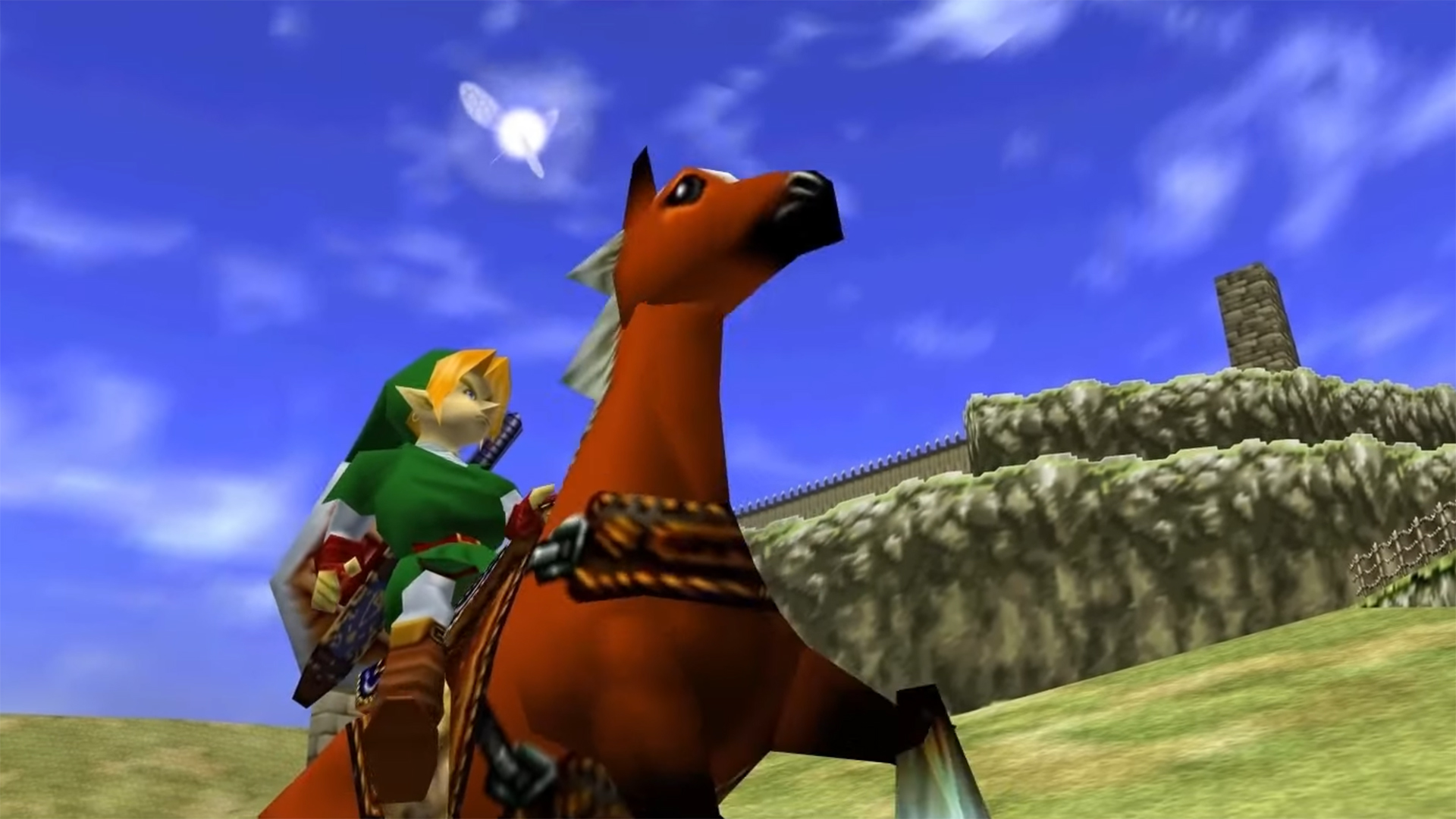
“You are a courageous boy…You are heading out on a big new adventure aren’t you?”
All those years ago, just as today, it is the land of Hyrule that remains Ocarina of Time‘s defining character. Miniscule by modern standards, to a ten year old with dreams of adventure in his heart Hyrule Field represented an impossibly massive virtual space, one that demanded to be scoured from end to end for collectibles, secrets, and just plain fun stuff to do. Never before in video games had I ever been inside a world that felt so consciously alive, where the sun set and rose, where people walked their routes and had their own schedules. I lost count of how many times I’d try and run the windmill grindstone like a treadmill, just for the fun of trying to keep pace with the turning, or how many times I’d leap off the waterfall in Zora’s Domain and experience that split second of heart-stopping hang-time before plunging into the water below. These days we’d call that ’emergent gameplay’ but all I knew then was that just existing inside the world of Ocarina of Time was more thrilling, more fulfilling than any other game that I’d yet played. Like many people who played it, I felt that Ocarina of Time spoke to me in a very special way. I was a small lonely boy with big dreams of adventure, and here I got to play as a small lonely boy with big dreams of adventure, except that those dreams could come true and I could set out to find the princess and save the world. Then of course there’s the fateful twist and leap forward in time, as the world around you becomes darker, scarier and sadder, and you’re tasked with growing up too fast as the story shifts into classical high fantasy territory. Critics of the game will often point to the fairly sparse and straightforward story as a weak point, but I never could understand that criticism, because all the ‘missing’ pieces of narrative simply fired off a million ideas in my head, conjuring rich backstories and relentlessly searching through the game for hints and allusions to a world, a tale far greater than could be contained in a 256 megabit cartridge.
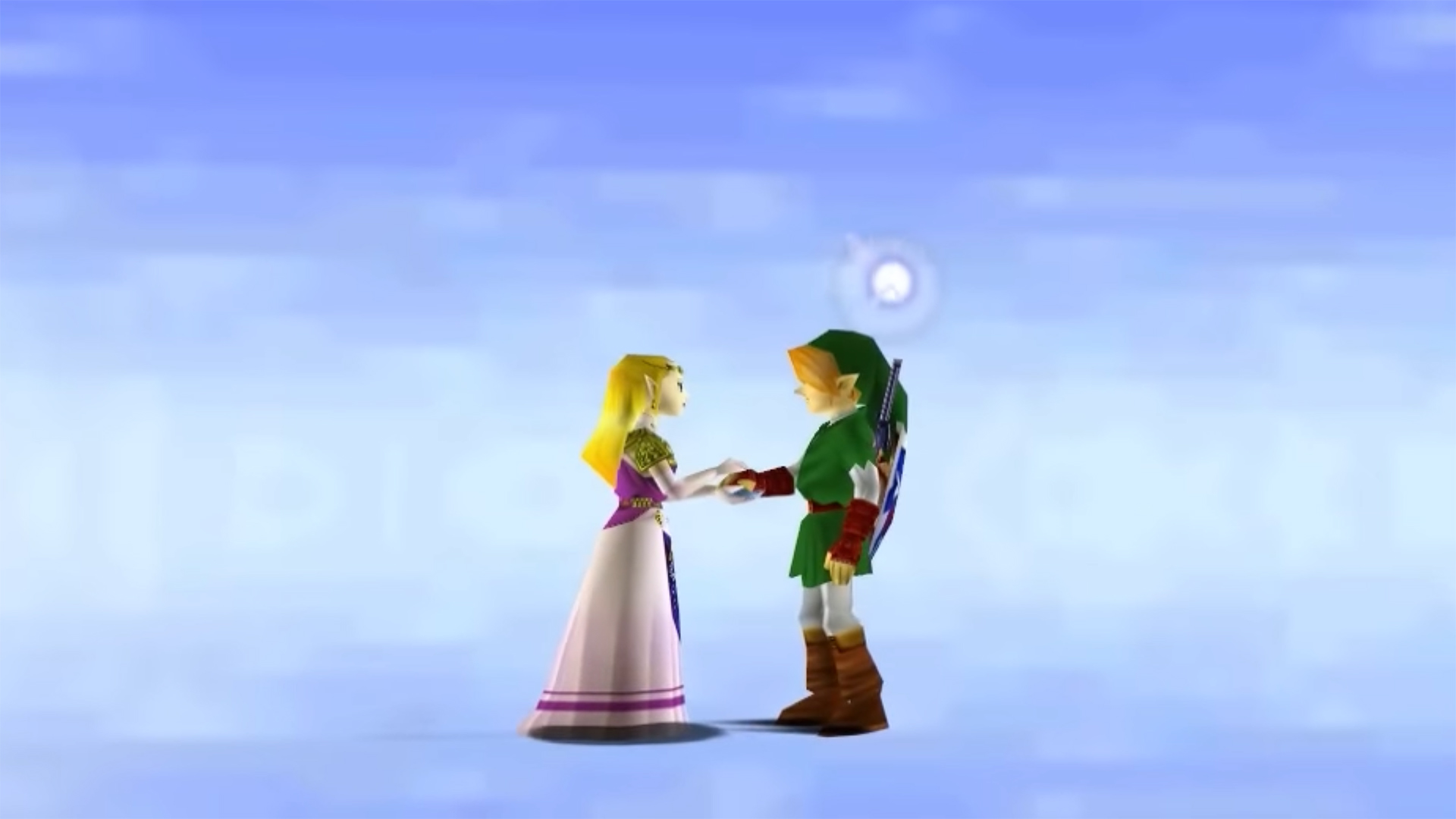
“Now, go home Link. Regain your lost time.”
All these years later those are my defining memories of Ocarina of Time – not the excellent setpieces, or the masterful dungeon design, or the revolutionary technology – no, I remember how it made me feel, how invested I was in everything about the game. I’ve completed Ocarina more times than any other game – my conservative estimate is at least 20 times – but every time I go back there’s still some of that magic that moves me, some of that dormant wonder and amazement that infuses the game to this very day. That’s why it’s so special, so important, so unforgettable, to me at least. And that’s why it’s the greatest game that has ever been made.
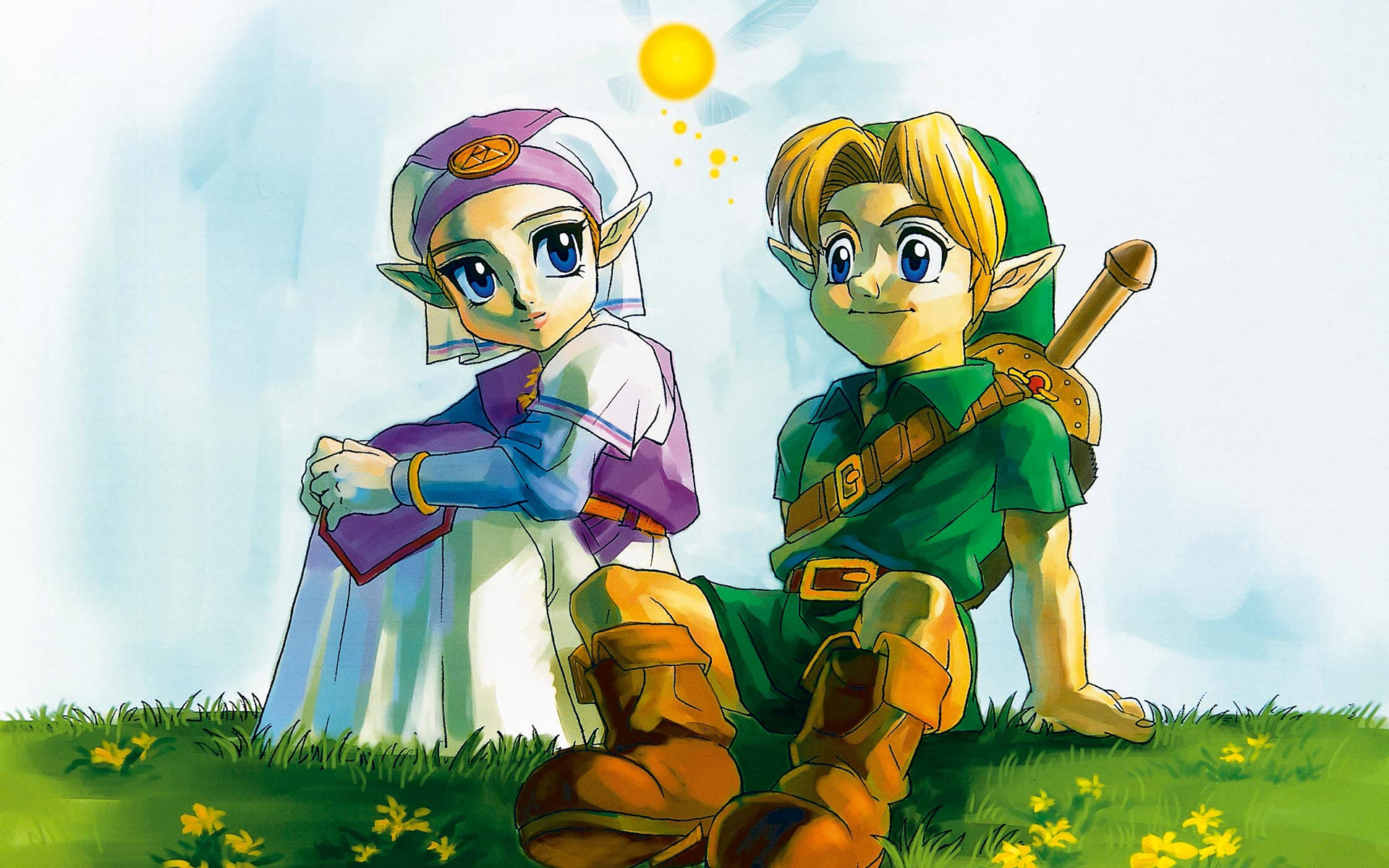
(Never) The End
Playing Ocarina of Time today – Ocarina of Time has been ported extensively so it’s pretty likely you’ll have *something* which can play it. Of particular note is the 2011 3DS version, which gave the whole game a graphical update and is generally much easier on the eye. However, my preferred method of playing Ocarina these days is using Ship of Harkinian, a full source port made possible after a team of incredibly talented volunteers managed to decompile the original game into C code. It’s available on Windows/Mac/Linux and (hacked) WiiU and Switch, and offers a faithful port of the original along with a vast array of enhancement options including true widescreen support, free camera, and improved framerate to name just a few.


 The Glorio Blog