 If you’ve been reading all the end-of-year posts that my esteemed colleagues have been putting out (something which I highly recommend incidentally) then you might have noticed a recurring theme – 2023 hasn’t been an especially great year for anime. Sadly, it’s a conclusion I have to concur with. This year has largely felt like the studios are treading water, casting around aimlessly for new ideas and trends to latch on to, while continuing to pump out sequels and followups to keep the pump primed. That’s not to say that there weren’t some excellent shows in among the fodder, but it definitely seemed they were in shorter supply this year than some others.
To an extent, this is a reflection of an industry that finds itself at an interesting point of flux. I noted in last year’s post that 2022 seemed to be dominated by sequels and franchise extensions, and that’s a tendency which if anything accelerated in 2023. Anime continues to grow rapidly in popularity in non-traditional markets such as the English-speaking world, and western distributors and streamers continue to gain increasing amounts of influence over anime production committees. Some of the year’s biggest and most notable projects saw large involvement from outside of Japan, with Netflix bankrolling Pluto and live-action versions of One Piece and Yu Yu Hakusho, while Crunchyroll continued to tighten their vice-like grip on the streaming market, gobbling up media distributor Rightstuf along the way. My point is that now more than ever anime is big business, and big business is sort of inherently in favour of safe, predictable bets like franchise extension.
 That’s not necessarily a bad thing and this year definitely saw a lot of positive outcomes from that increasingly wide focus – Pluto may never have escaped development hell without Netflix’s intervention for example, while Scott Pilgrim Takes Off was a fine example of how anime sensibilities and a western story can integrate. I’ve also no doubt that the continuing worldwide popularity of Spy X Family is part of what allows the show to keep its production values so high. Still, I can’t help but be a little wary of the trend, especially since many of the sequels and continuations which came out this year were disappointing to me. Of most note was Birdie Wing going from inspired insanity to a merely decent sports comedy with a few good jokes. While it was always going to be hard to maintain the breakneck underground golf-mafia madness of the first season, the dropoff was significant enough that it felt like a major disappointment.
Also disappointing was the back half of Mobile Suit Gundam: The Witch from Mercury, although the decline here was nowhere near as steep or damaging, and mostly the result of the show gradually shifting its focus towards the corporate conflict which had been going on in the background of first half of the story. The thing is, I never found the overly-complex cold war of companies, subsidiaries, and CEOs as compelling as the grand political drama of the best Gundam shows, and in putting it front and centre Witch from Mercury had to sacrifice much of the pleasant breeziness and character development which had made its first half such an enjoyable watch. I’m sympathetic to the writers in this regard – there’s no real way to make a show breezy *and* a serious thoughtful story at the same time – but I do wish they had opted for something other than the approach they took. I never really felt the connection between the space-based war and Earth, which is a shame because the Earth-based stories consisted of some of the show’s best and grittiest storytelling. The finale was also a weakness, with muddled storytelling and an over-reliance on time-honoured Gundam Space Magic™ to solve problems. Yet despite these criticisms, I greatly enjoyed Witch from Mercury overall and its strong characters, good writing, and fine mech battles made it the best piece of Gundam media in quite a few years. Purely anecdotally, it seems like the series was a jumping on point for a lot of new fans and I’m pleased that they were able to be greeted by a high-quality show.
 Continuing on the theme of shows that were good-but-also-disappointing, where do we even begin with Heavenly Delusion? There’s a decent argument to be made for it as the best show of the year, packed as it was with excellent, gripping storytelling, likeable and endearing characters, and a fascinatingly strange, hostile world that nevertheless held enough humanity for there to be hope for a future. For my money at least it had the year’s best single episode by far in episode 8, a heartbreaking tale of love and death that managed to be simultaneously dark and sad and yet unbearably beautiful in almost equal measure, a tragedy that only became more meaningful as the show went onward and we uncovered its beginnings.
When you look at the care and craft that went into such an exceptional piece of television, it’s almost unbelievable that the same show could also deliver one of the year’s worst episodes, the pointless, scuzzy and dog-tired bundle of rape tropes that made up episode 11. I’m not going to into much detail here because I feel like most of this should be obvious to anyone with even the most basic media literacy, but to be clear – it’s not that sexual assault should be off-limits to storytelling, but it’s that it’s so often just used as a lazy crutch to convey how evil a villain is, how helpless a heroine is, and how noble our hero is for coming to save her. And that’s…exactly what happens here, down to the very last detail. Even if we put aside how atonal, weird, and creepy the whole thing is (for the record: very) it’s just bad bad writing, plain and simple. What’s worse is that writing bad sexual assault is like poisoning a well – it begins to seep into everything it touches. The follow-up finale episode is actually pretty good, and occasionally great, but it’s all rendered facile by the fact that we have to wrap up this horrifying, life-changing event in 22 minutes so we can have our upbeat, the-adventure-continues signoff. It frustrates me so much that I have to talk about this awful shit rather than telling you about all the things I enjoyed about Heavenly Delusion, like the gorgeous animation, the surprisingly nuanced treatment of gender dysphoria, or the gripping puzzle-box plot full of enjoyably gonzo sci-fi ideas. But the show made its bed, and now it has to sleep in it. What a pity.
 If we’re talking about disappointments, I’d be remiss to not include a few from the cinematic realm too. Gridman Universe was easily the most dispiriting of these, at least to my sensibilities. Yes, this was a handsome production full of familiar faces we love, some wonderful little nuggets of characterisation, and some unimpeachable giant-robot-versus-monster battles. What it lacked though were the things that I had come to associate closely with the Gridman/Dyanzenon duology, namely thoughtful, introspective storytelling that gave us a deeper look into our characters’ lives, emotions, and what they were going through. Perhaps it was unrealistic of me to expect such things on something sold explicitly as a big rock-em-sock-em movie, but my counterargument would be it’s actually Trigger’s fault for making such good, nuanced TV shows. Those bastards.
On a similar note, Hideaki Anno’s much anticipated Shin Kamen Rider also fell flat with me, largely because Anno seemed unwilling to embrace the inherent pulpiness of the franchise. While his sparse, reverent approach worked well for Shin Godzilla and Shin Ultraman, Kamen Rider felt, despite the copious claret, curiously bloodless, an exercise in nostalgic recreation rather than an actual attempt to modernise the original story. Anno’s film, as I stated in my review, is ultimately too cold and impersonal to feel at home in the charmingly campy world of Kamen Rider.
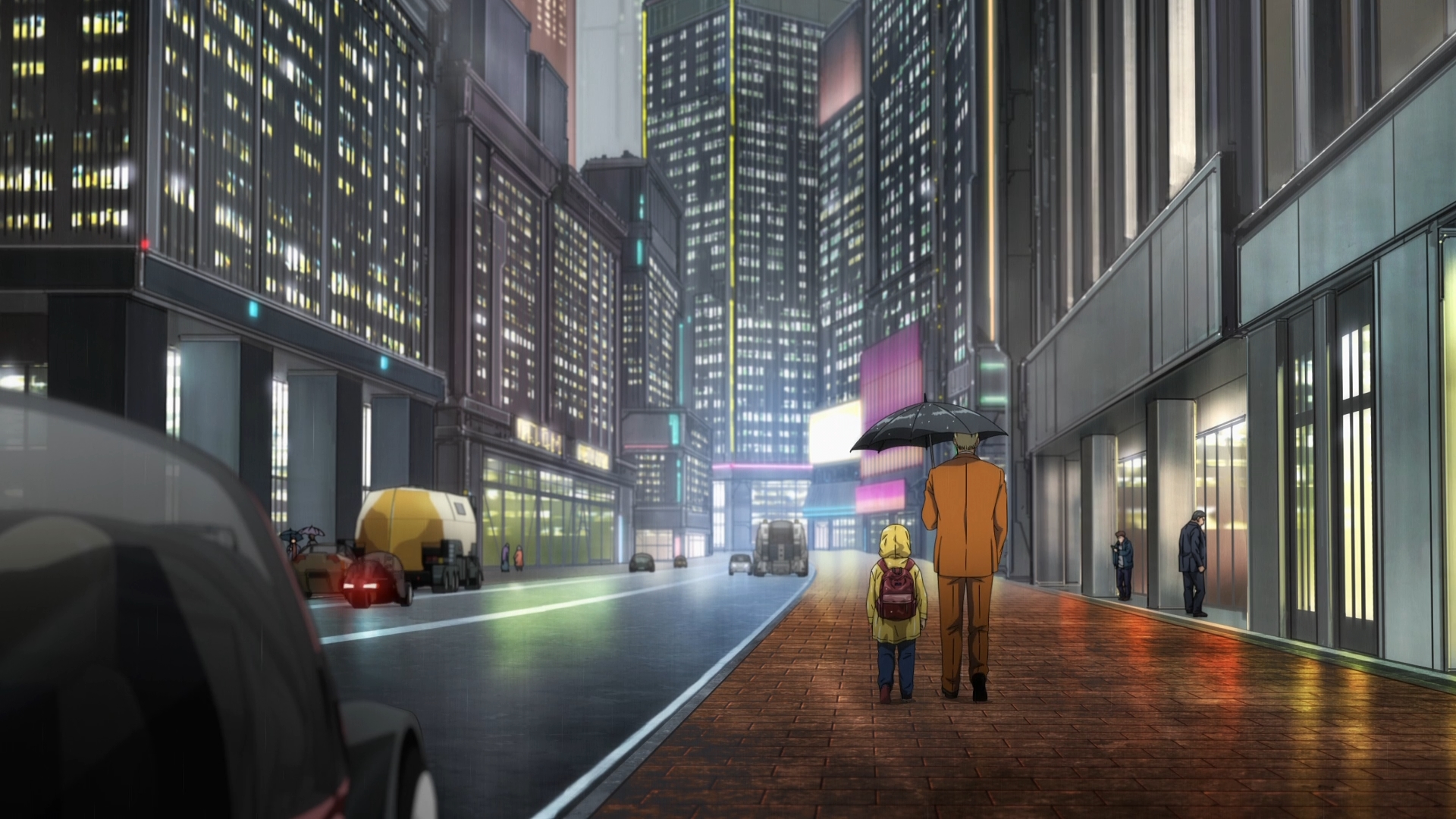 That’s a lot of disappointments! So how about we instead pivot and talk a bit about pleasant surprises. Foremost on this topic has to be Pluto, not because of the quality of the work – I read Urasawa’s exceptional reimagining of Astro Boy many years ago – but because the damn thing exists at all. The idea of a Pluto anime has been kicked around in one form or another since the original publication of the manga, and this particular project has been stuck in development hell since 2017, so the fact that it suddenly emerged, fully formed, was reason for celebration in itself. Pluto is such a well-crafted, powerful story that if you achieve a basic level of competence it’s kind of hard to screw up, but I was nevertheless impressed by the care and smart choices made in this adaptation. One of my major critiques of Urasawa’s manga is that, as excellent and compelling as it undoubtedly is, it’s sometimes feels a little cold and impersonal in its brilliance, especially compared to the vibrant cartoonishness of the Tezuka original. While the animated version doesn’t completely shake that impression, the addition of voice acting, music and all the tricks of the moving picture do a huge amount to enhance the depth and drama of the story, and add some dimensions of humanity I felt the manga version occasionally lacked. It’s a fantastic production and one which does the legendary source material proud.
 My second and final surprise this year is by far the more unheralded and unexpected of the two – if you told me that an adaptation of a manga by an author whose previous work we were notably cool on, by a studio that has basically done nothing but crank out light novel schiock, would become my favourite show of the year, I’d have regarded you with some suspicion. But Geektoys’s adaptation of the late Nami Sano’s Migi & Dali proved to be a triumphant dark horse, a fascinatingly weird and idiosyncratic story that ably balanced goofy comedy, dark & creepy undertones, and even genuinely heartfelt emotion. It’s a story about the sins of the past, guilt, co-dependence & individuality, and the masks we all hide behind. It’s also a show where people are threatened by killer baguettes, tween boys are mentally regressed to infanthood, and characters proudly proclaim ‘I have never wet my bed’ in near-Jojo levels of memetic dialogue.
Throughout its run it often seemed impossible for the show to reconcile its two conflicting personas, and it’s fair to say that there are many occasions where going for straight drama or straight comedy may have proven more technically effective. But that would also have produced a far less strange, unique, and memorable piece of media, and when it comes down to it I’ll take bizarre iconoclasm over run-of-the-mill competence every single time. Migi & Dali is ultimately a story about how hiding behind the veil of normalcy and perfection is self-destructive, and it’s better to be open, honest, and let your freak flag fly high. In that sense it’s perfect anime – I fell in love with the medium because of its unique blend of weirdness and earnestness, and I can’t think of an anime that better encapsulates that dichotomy than this one. The only bummer is that Sano, sadly, will never have the chance to follow this one up. So my deepest thanks to her for leaving us this one last story.
Thank you also, as always, to all of you reading this, and to everyone who followed our work throughout the year. I’m a lot older, and perhaps a little wiser, than when we started this gig but it still brings me deep satisfaction when even a single person enjoys the stuff we put out. That’s why GLORIO will continue unabated in 2024, and I hope some of you will come along with us too. See you on the other side.


 The Glorio Blog