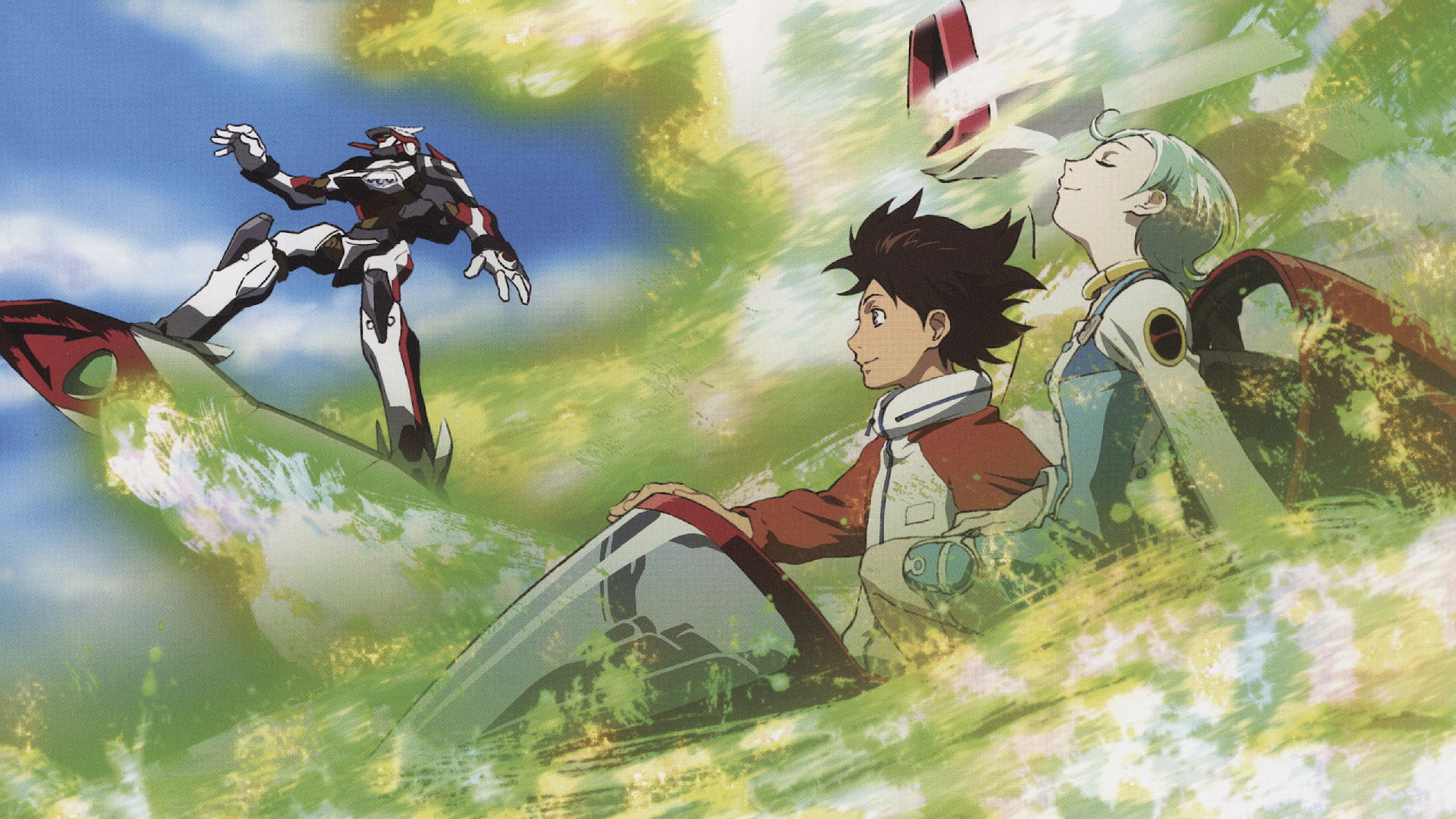
 We find ourselves at the end of another year and as always, the familiar refrain is ‘man, I really should have written more stuff for the blog huh?’. I mean, I didn’t even manage to do my traditional Kamen Rider wrapup (Gavv was really good by the way!). My defence, at least this year, is that I actually did meaningfully contribute to the blog in other ways, mostly through our latest recap podcast Blue Mondays.
Honestly, I’ve been thinking about trying to get a Eureka Seven podcast off the ground for years, ever since Gee & Iro pioneered the idea in these parts with Legend of the GLORIO Heroes. If you ask me my favourite anime on five different days you’d probably get five different answers, but regardless of whether it’s the ‘official’ favourite or not, Eureka Seven has always been and always will be very close to my heart. It was one of the very first shows I watched when I was introduced to the medium and, I think, the show that taught me that anime was capable of so much more than just surface level cool. It taught that anime could be about the big themes, like love, freedom, existentialism, and football. Eureka Seven is also fairly deeply intertwined with the history of this blog, as the first anime post I ever wrote for GLORIO was a recap of Eureka Seven AO episode 13, and my perverse love-hate fascination with the show was something which came up a lot in the first couple of years of the blog. With all of that history, 2025 seemed an appropriate time to turn that idea into a reality, given that it was the 20th anniversary of the show’s original airing.
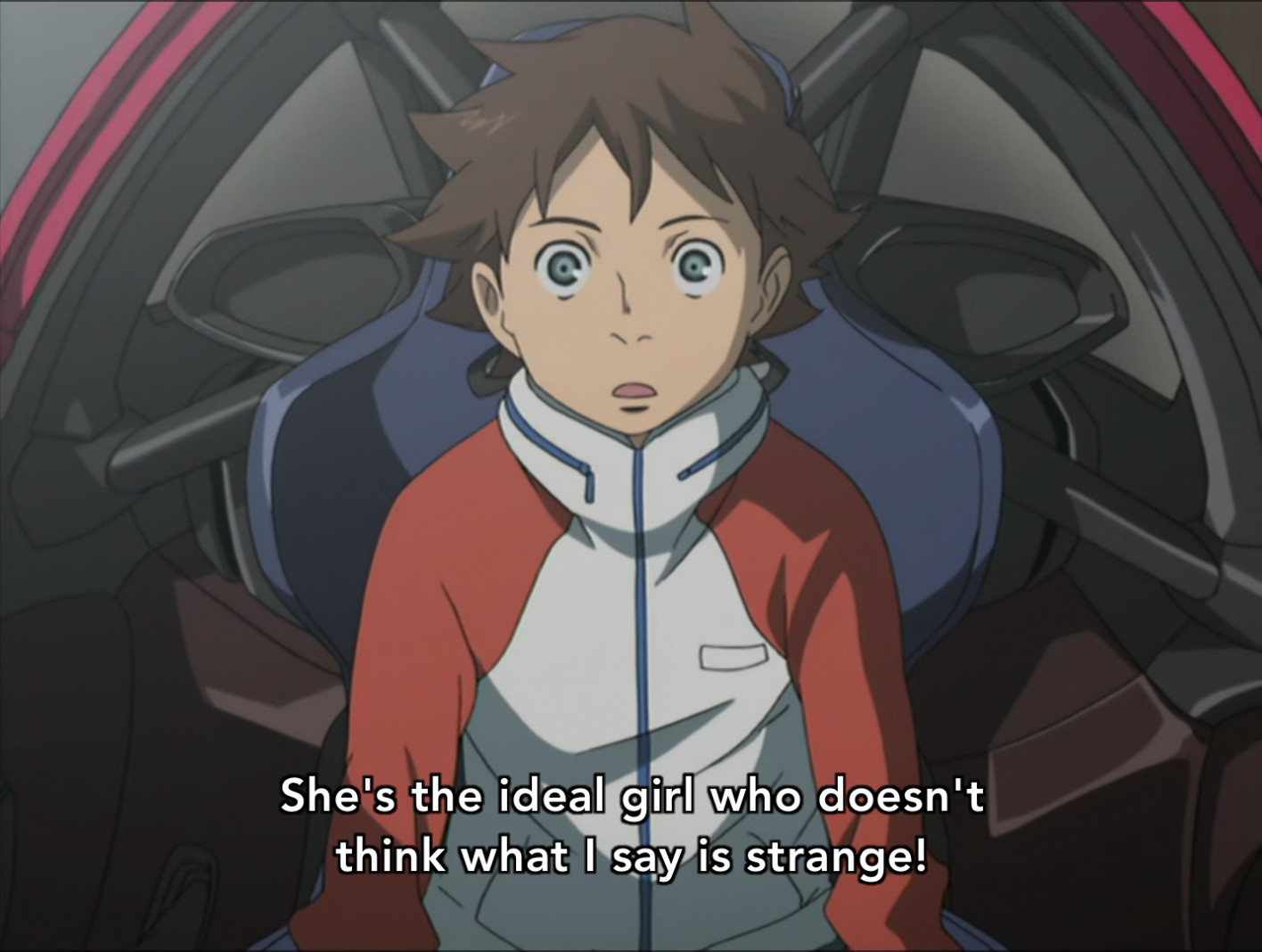 Returning to a show after an extended time away is always interesting of course, but this show, this time period, and returning in this way is especially fascinating. When I first watched Eureka Seven I was 21 years old, and at that age I was obviously drawn more to the show’s surface level aspects – the big, operatic story of love at first sight, the extremely on-the-nose environmentalism, and the abundance of extraordinary robot battles. That’s not a bad thing – those elements are the things which made me fall in love with the show originally, and remain among my defining memories, but it’s also a lot of fun to go back and notice some of the more nuanced undercurrents in the writing; Holland’s journey from nihilism to a more mature, if still bitter, form of self-reflection, or the recurring themes of fatherhood and role models that are dotted throughout the narrative, or the sneaky evolution of Maurice as an actual, fully rounded character just in time to make him part of the narrative at the most dramatic possible moment. Part of the joy of a detailed rewatch is picking up on these slightly less obvious threads and seeing how they enrich the main narrative of the show.
Structurally, the fortnightly schedule was largely dictated by the need to work around our main podcast, The GLORIO Chat, and indeed it’s the format which all of our previous ‘side’ podcasts have adopted before. Within that, I decided that two episodes of the show per episode of the podcast would be the ideal pace for us to go with. There were two reasons for this – firstly, I wanted our episodes to be considerably shorter and more focused than the often 2hr+ sprawl of the main podcast, and secondly, it meant that we’d be going over the show in roughly real-time, an idea which intrigued me. Eureka Seven is a show with big ideas, some of which can benefit from having time to roll around in your head a little, and I thought a slower pace would benefit better discussion.
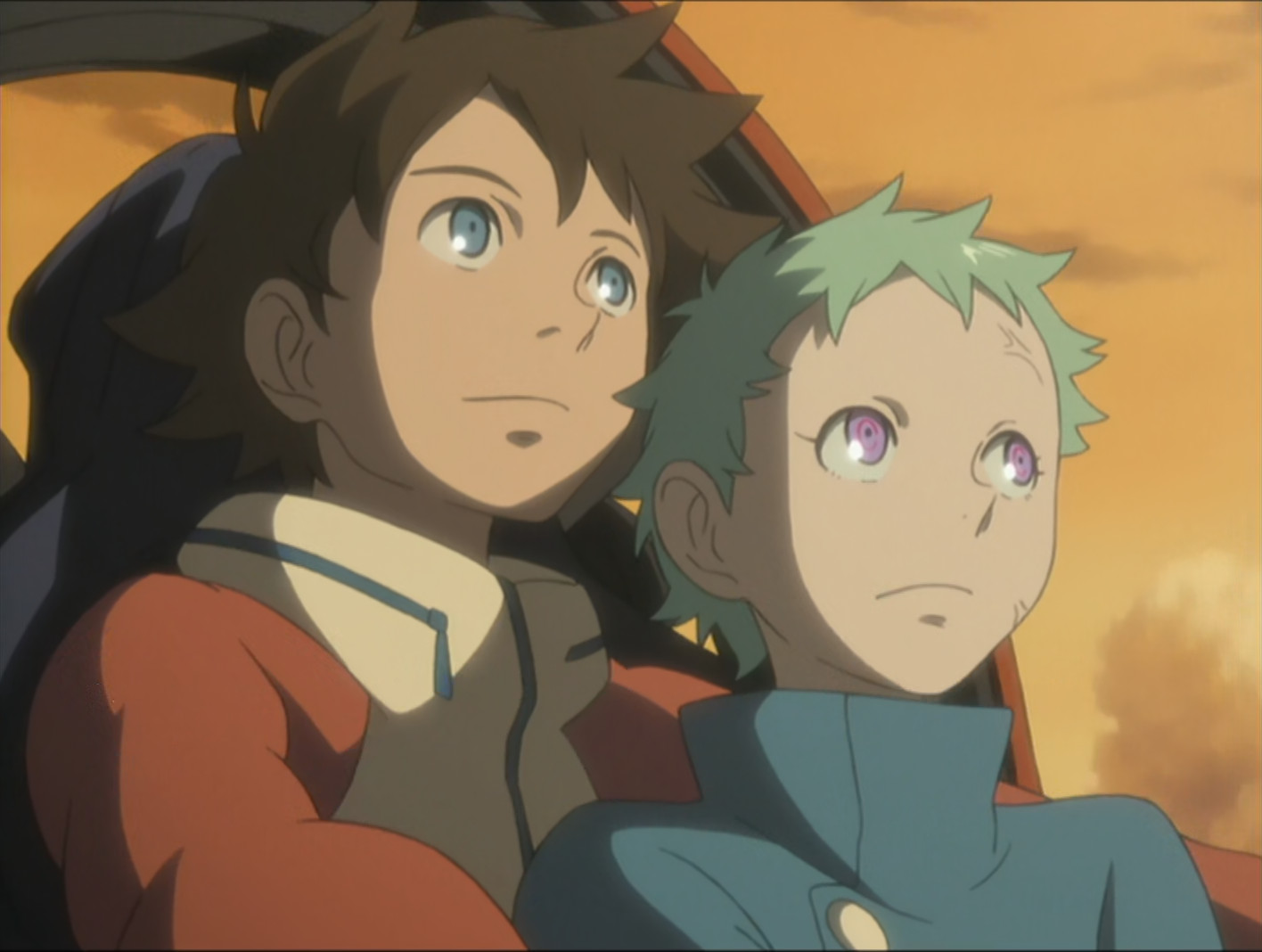 Of course, I’d be remiss in talking about the podcasting process if I didn’t mention my wonderful guests on the podcast, Aquagaze and Gee. One of the real joys of a rewatch project like this is the ability to go over scenes and sequences that may be familiar and set in stone to you, and have your entrenched position challenged by fresh eyes with fresh interpretations and ideas. Aqua and Gee represent two polar opposites of viewer for the show and that’s why I was excited to bring them both aboard. Aqua represents the newcomer, the outsider with little-to-no foreknowledge of the show, or indeed the genre, beyond the things that have leaked into the public sphere through osmosis. He offers an unbiased, clear-eyed look at the show from the perspective of one unfamiliar with its tropes and reputation. Gee meanwhile, hews closer to my own perspective, a dyed-in-the-wool fan who is even more immersed in the history and style of mech culture than I am, and is able to offer crucial context and pick out individual creators influences over scenes and cuts. Together I like to think the three of us can always find an interesting new angle on any given scene or episode.
I think the big fear when you go back to a beloved favourite like this is that it will wither under the harsh glare of close analysis, that an older or more cynical you will be unable to find the same sense of joy in the work that you once did. I don’t think that that’s happened in this case – honestly, if anything this project has given me a deeper appreciation for how good Eureka Seven is, and how many levels the story works on. I don’t think that would be possible with the vast majority of shows, but it’s certainly the case here. Although it’s been a long time coming, I’m glad I finally took the time to get Blue Mondays up and running, as it’s grown into one of my favourite things I’ve ever done for the blog. Thanks to everyone who’s listened over the past year, and as always of course thanks to everyone who’s taken the time to read or listen to anything we’ve posted on the blog. See you on the next wave.


 The Glorio Blog