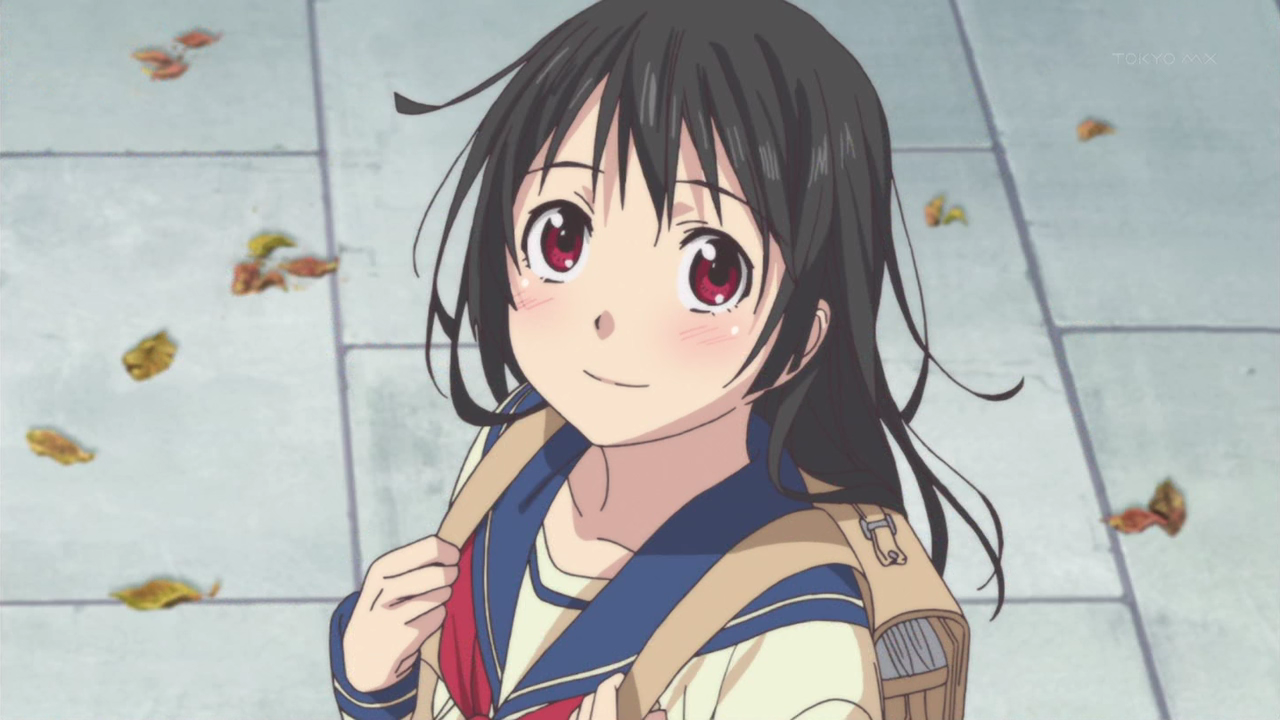
If I, say, entirely hypothetically, were to teach a guest college on the science of cuteness, there would be no better show to use as an example than Inari, Konkon, Koi Iroha. While the cynical corporate cuteness often plaguing anime consists of little more than brewing tired moe cliches and a voyeuristic obsession with girls being touchy-feely with each other into a formula for instant success, Inari, Konkon, Koi Iroha is a whole different beast. It is a heart-meltingly adorable anime, but reaches its high levels of charm not only through tiny talking animals and tingly piano music, but most of all though strong character work and an impeccable atmosphere.
Leading lady Inari herself is but one of the many elements that set Inari, Konkon, Koi Iroha apart from many other ‘cute’ shows this season, but she is by far the most important. Very much the heart of the entire adventure, in any meaning of the word, Inari is a ditzy wallflower like so many anime girls her age are. Nevertheless, her clumsiness is never there to appeal, but to relate. Harkening back to the honest, idealistic heroines of shoujo past, Inari is perky, sweet, funny, upright, but most of all, not without fault. In fact, it’s Inari’s subconscious selfishness and egocentrism that propel most of the plot and save Inari, Konkon, Koi Iroha from becoming yet another wish fulfillment fairytale fantasy in which an everyday girl gets everything she ever wanted for no good reason. Inari’s flaws and subsequent character development, heartfelt feelings and quirky sense of humour make her a great protagonist to have along. You can’t help but to root for her, even when she screws up, and when she gets things her way, you’ll know she deserves it.
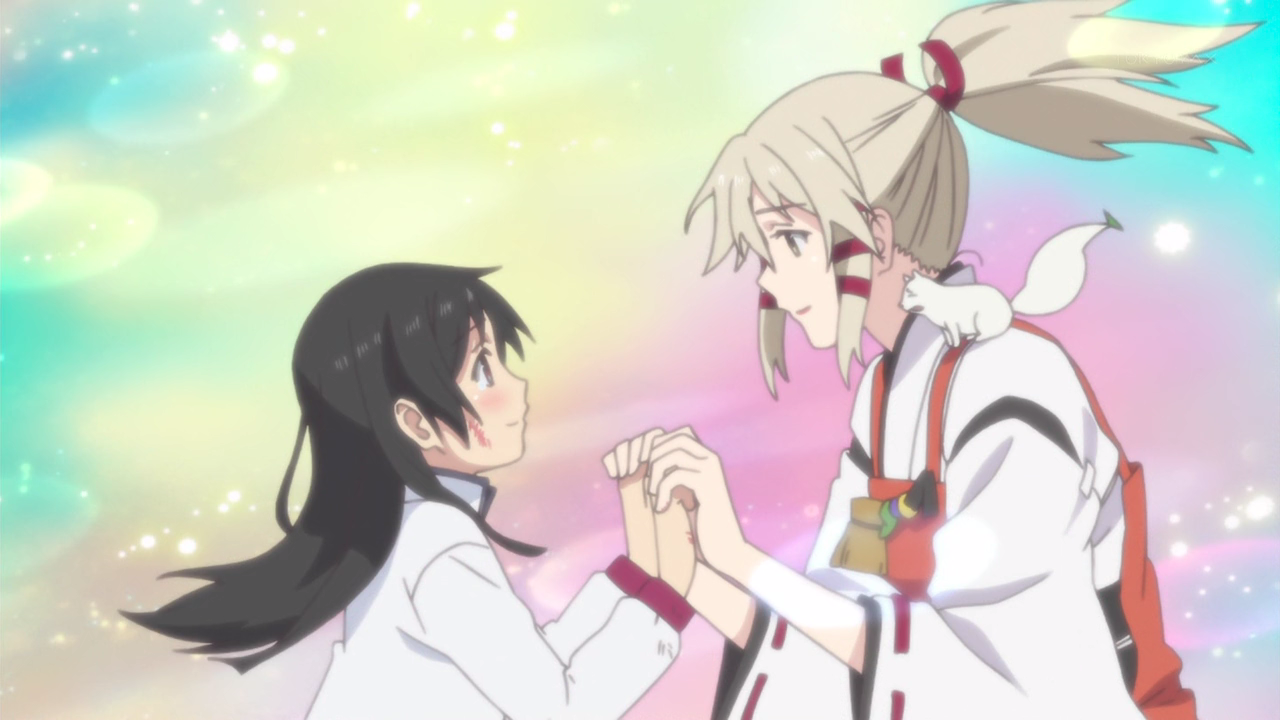
That doesn’t mean Inari, Konkon, Koi Iroha is some sort of writing revolution; anything but. It’s the age old story of a plain girl trying to get the most popular guy in school to notice her and the most popular girl in school to acknowledge her. Presentation is key here, however, as the strongly knit character dynamics and subplots escalate to the point where Inari’s bumbling attempts to win her beloved Tanbanbashi’s heart soon become the least interesting thing going on. Between the farcical shapeshifting antics, Inari gets caught up in the crossfire between her guardian ange– errm, goddess Uka and her eternally bickering divine colleagues, soon becoming the subject matter of a pantheistic squabble for the ages. Class queen Sumizome turns out to have an even more unfortunate unrequited crush going on, Inari’s older brother Touka is going through a ‘bit of a phase’ and can’t keep his nose out of her business, and worst of all — another girl’s chasing after Tanbanbashi as well!
Because Inari, Konkon, Koi Iroha is only ten episodes long, a lot of this plotting has been rather thoroughly compressed, which leads to a breakneck pacing that only slows down for a rather tame, drawn-out finale. As such, it entirely eschews the genre’s trademark meandering melodrama in favour of rapid-fire shenanigans and a healthy sense of progression — though resulting in a lot of the side character interactions from the manga getting pushed aside a bit. Sumizome’s and Maru’s big character moments come much quicker and without a lot of build-up, Tanbanbashi is quite the non-existence and a lot of the little slice-of-life moments get removed entirely. Luckily, this does mean the more annoying characters (read: really just Toshi) become a lot more tolerable, so the anime certainly brings its own version of the story to the table that’s worth checking out — even when you have already read the manga. If not for the heavily condensed, ‘best-of’ approach to the manga’s plot, most definitely for the presentation.
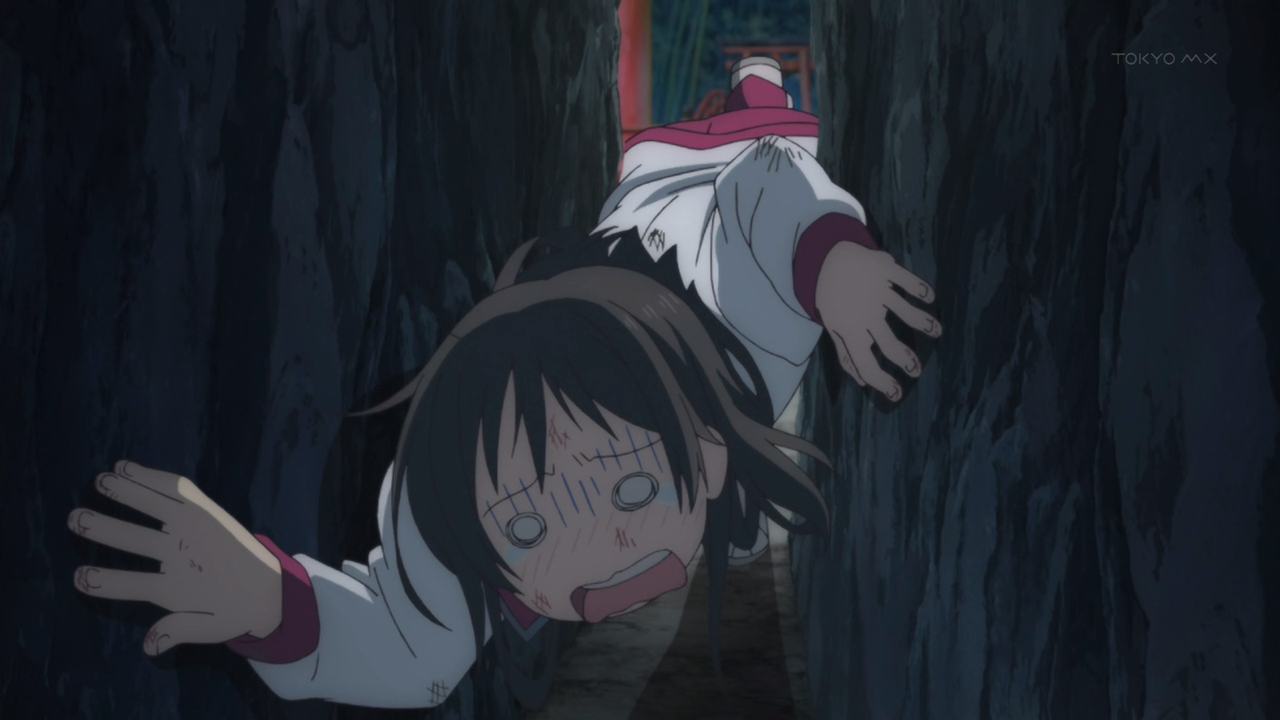
While Inari, Konkon, Koi Iroha never particularly stands out in the animation department, it retains a consistently passable level of quality over its ten-episode run. While the characters are well-animated, the beautiful backdrops are nothing short of jaw-dropping. The iconic Fushimi Inari Taisha shrine in Kyoto is brought to life in detailed, pastel coloured landscapes, inviting and motherly at day, yet eerie and mysterious at night. The realm of the Gods looks like a wall scroll brought to live, strange enough without becoming alienating, and populated by deities so bizarre you’d wonder why anyone would like to worship them. Character designs are relatively down to earth for anime standards. Inari looks and dresses like an actual middle schooler, and it’s hard not to crack a smile at her trademark dorky, oversized dresses. Every visual in Inari, Konkon, Koi Iroha is equal parts realistic and enchanting. It’s rare to see atmosphere being created this well, most of all because this is Production IMS’s first full anime project. If they can keep this up, I can see great things lying in their future.
Every aspect of Inari, Konkon, Koi Iroha‘s production, from the visuals to the voice acting adds in part to its overwhelming sense of nostalgia and fuzziness. Though the heavily compressed storytelling contradicts the show’s overall happy-go-lucky vibe quite a bit, and the idealistic central romance teeters on the edge of the clichéd, Inari, Konkon Koi Iroha is above all a truly adorable show. Lovable characters, heartwarming romance and soothing visuals make up the order of the day here, but luckily, the show doesn’t forget that in order to make people truly feel good, you need some meaty drama to open up a void for all the snuzziness to fill. It’s this that many ‘cute’ shows fail to understand, but something Inari, Konkon, Koi Iroha lives and breathes. It’s far from a revolution, but if you like fluffy love stories, it’s one of your best bets.


 The Glorio Blog
Inari, Konkon, Koi Iroha is one of those shows that just didn’t work for me in the end. I liked the first couple of episodes a lot and I stuck with it the whole way through, but… I don’t know, something just wasn’t clicking. The humour, which I thought was just about perfect originally, seemed really repetitive by the end, and the drama of most of the latter half of the series felt rather forced. Not that I think it’s necessarily an outright bad series – just one of those titles that didn’t end up sticking with me, I guess.