
Alternative title(s): Ao no Hako
Manga adaptation by WIT Studio
Streaming on Netflix
Premise
Taiki Inomata is obsessed with badminton and the cute girl who practices her basketball in their school’s gymnasium. Will he ever muster up the courage to go talk to her? Does anyone care?
Aqua’s verdict: Empty Box
Oh boy, here we go.
I’ve already talked at length about my grievances with Blue Box on my personal blog, and I’m not going to re-litigate all of that yet again. To make a long story short, Kouji Miura’s original manga is a beautiful thing to look at, but about as bland as a box of store-bought animal crackers when it comes to its storytelling. This anime adaptation is essentially the same thing.
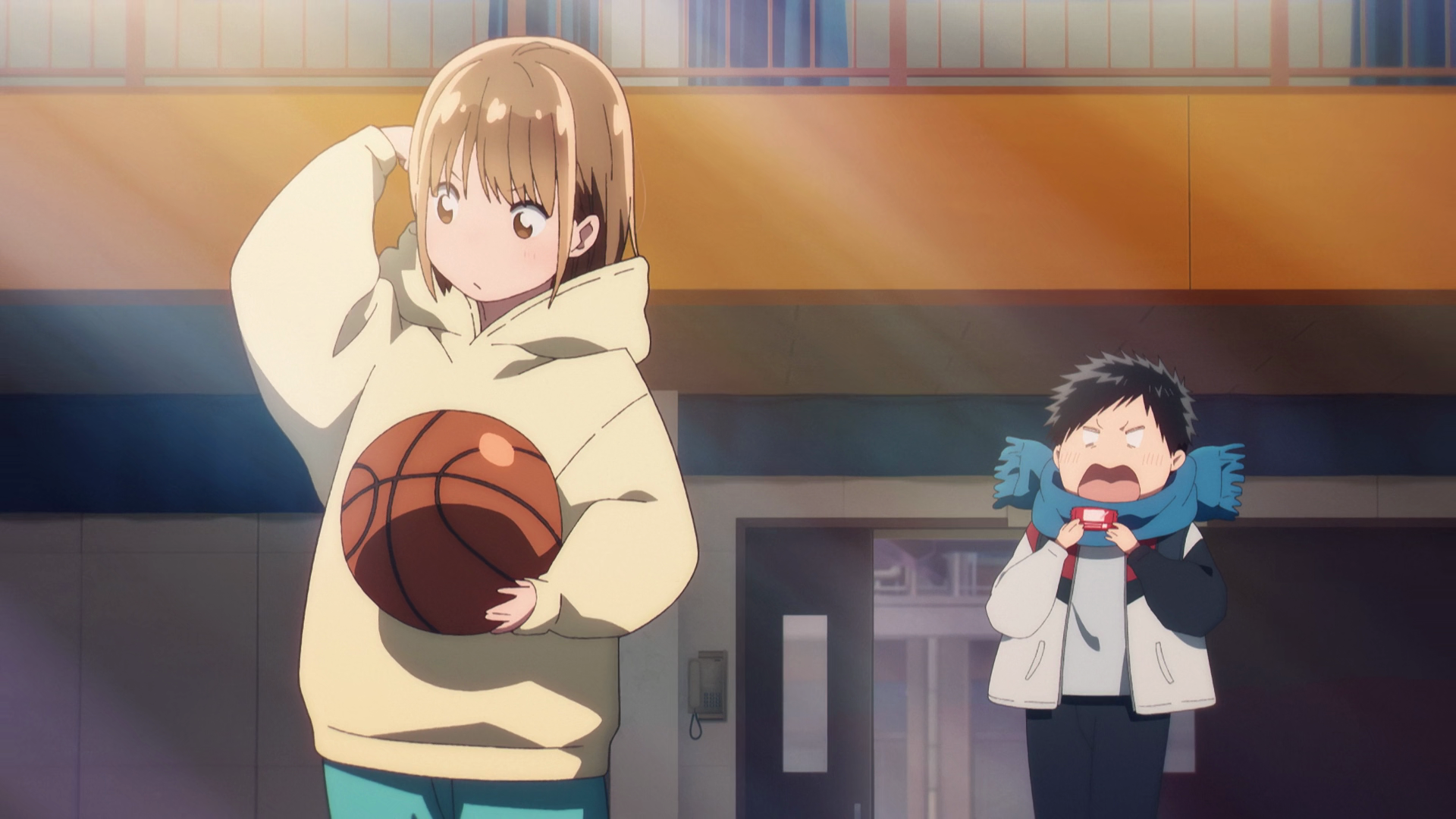
Blue Box‘s problem is that it is a romance for people who wear gloves when handling safety scissors — so utterly toothless in its lack of any meaningful tension or friction that it makes your average episode of Hidamari Sketch look like the works of Gaspar Noé. No one in Blue Box’s cast of eugenics breeding project alumni has any distinctive quirks, hang-ups or flaws; they all blithely twirl from one non-conflict onto another so their golden years of high school glory — a concept this show is about as down bad for as your average isekai show is for stat screens and misogyny — go down as smoothly as infant formula down a baby’s gullet. And indeed, just like with baby formula, no one with any shred of maturity in them has any reason to let Blue Box into their life.
Nevertheless, I can’t deny that this wispiness is entirely by design. Blue Box fits right into the recent trend of teen shows seemingly eschewing the ham-fisted drama that has become all but synonymous with the genre and going all in on fluff over friction. As a concept, I can totally get behind that. Yet whereas shows like Netflix’ Heartstopper at least justify that breeziness by offering uncompromising bliss to queer characters, who have traditionally been denied that very thing to a point where “bury your gays” became a meme, Blue Box has no such unique selling point. This show is the blank slate other shows add their particular spice to, but it has no spice of its own. It is defined only by just how aggressively it plays the platonic ideal of what a “normal, fulfilling high school life” should be, err, straight.

In other words, the characters in Blue Box are the people the main characters in any other manga would compare themselves to — popular, extroverted, hard-working stock photo models who got particularly lucky in the gene pool lottery — and that just makes this entire thing feel deeply, fundamentally wrong. For better or — more often than not — worse, manga and anime are media deeply rooted in wish fulfilment, and Blue Box is no different. Why, then, is it hell-bent on fulfilling the wishes of the people whose very existence already is wish fulfilment?
As a result, the source material for this anime is not just bland, not just dull, it is aggressively clinical, and the adaptation does nothing to mitigate that fundamental flaw. The conflict in this first episode is just a misunderstanding in which no party is actually to blame, and the ending twist is so utterly predictable Taiki’s over the top reaction is far more befitting of the realization that yes, indeed, this is actually Blue Box’s entire premise. This pilot could have been a 90-second PSA put out by the Department of Education to make those darn kids get up from their couches and do a sports, and nothing of value would have been lost.

Besides, honestly? The PSA comparison is an apt one. Blue Box feels propagandistic, its saccharine dedication to singing the praises of unconditional hard work, ambition for ambition’s sake, superficial heterosexual attraction and — as Shinzo Abe nods in approval from beyond the pearly gates — domestic bliss, combined with its squeaky-clean presentation, conveying distinctly evangelical vibes the likes of which the visual arts haven’t seen since the glory days of Norman Rockwell.
In the end, it’s Blue Box’s aversion to anything that could make anyone hate it that makes me despise it. This show is the direct antithesis of anything I come to anime for — even its cinematic animation and directorial flourishes representing nothing but a trite, manufactured “niceness”. Congratulations to the production staff for conceiving of approximately hundreds of ways to visually convey puppy love, I guess, but that love still isn’t getting any less puppy. Nothing can stop Blue Box from feeling like the industrially moulded plastic smile on a blonde-haired, blue-eyed Ken doll’s face — a superficial picture of positivity mass-produced by alien entities that couldn’t comprehend humanity even if they were staring death in the face. I couldn’t care less about indulging this, man. I’ve got bills to pay.


 The Glorio Blog