
Scotland Loves Animation is a yearly festival that runs in Glasgow and Edinburgh, bringing a curated selection of premieres and classic movies to the big screen for a week in October-November. Three of us from the GLORIO crew returned for a week packed full of old and new films alike.
The event returned to the Cameo Picturehouse for a third consecutive year. While refurbishment continues on the Edinburgh Filmhouse, SLA’s Edinburgh home between 2010 and 2021, we can’t help but wonder what 2025 might look like. The Cameo is a terrific venue with incredibly kind staff, a sentiment that has been echoed by the organisers themselves, which makes it hard to potentially say goodbye if the Filmhouse is in a position to host next year’s event. It’s a tricky situation for sure.
Something we saw a little of last year was The Cameo’s willingness to open up more screens for the more popular films. In fact, Look Back was so popular this year that all three screens were showing it, albeit with a slight delay between each other to allow Jonathan Clements to run between them for his introductions. It’s a great sign that these films are reaching a wider audience.
Among the fourteen screenings on offer this year were two EU premieres in A Few Moments of Cheers and Trapezium, with a whopping 8 other films being UK premieres. There were also a handful of pre-recorded Q&A sessions, including one with POPREQ, director of A Few Moments of Cheers.
We attended thirteen of these screenings during the week, which means we have a lot of Thoughts™ to get through. As always – buckle up!

Promare
Arson incidents have been increasing in the city due to the Burnish; humans that have been granted the ability to control fire. It’s up to the Burning Rescue team to fight these fires, and bring the Burnish into custody.
Euri’s verdict: This movie burns with an awesome power
This was my second time watching Promare in the cinema, and it still slaps. Trigger’s now-familiar animation style is on full display in this film, which makes it perfect for watching on the big screen. Incidentally, despite this being my third watch, I somehow hadn’t noticed Kray Foresight’s Japanese voice actor was Masato Sakai. I will now use this as an excuse to recommend Hanzawa Naoki, a terrific j-drama that he’s very well known for.
Peter’s verdict: A certified banger
Despite owning the blu-ray since launch, I’ve yet to actually put it into a player and instead have seen Promare in cinemas multiple times. It never fails to disappoint with that Studio Trigger visual flair and banging soundtrack from Sawano Hiroyuki. I appreciated the mention at the start about how shapes feature heavily throughout the film, with the Burnish being represented by triangles, Galo being a square, the firefighter crew being circles, etc, and then you see the film and see those shapes everywhere. Really solid start to the week.
colons’ verdict: Still stunning, still jarring
Is the fact that there’s a Voltron named Deus X Machina intentionally lampshading this film’s structure? Maybe I was just too distracted by the still-stunning visuals. Maybe there’s a bunch of references I’m not getting. Am I being dense here? Is there foreshadowing for what’s under the lake that I just missed?
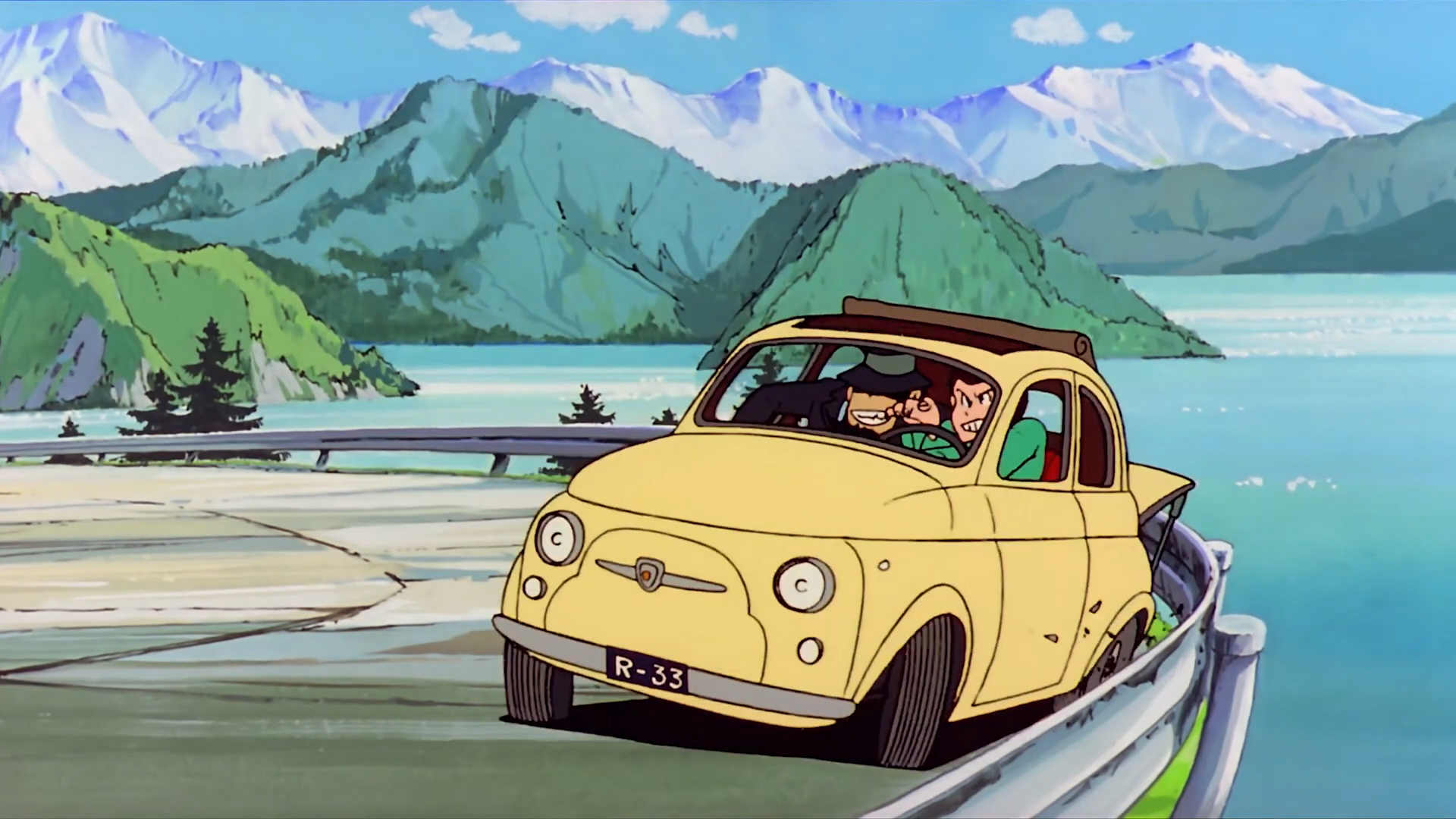
Lupin III: The Castle of Cagliostro
Lupin and Jigen decide to investigate the small nation of Cagliostro due to an influx of counterfeit bills entering circulation. They soon encounter Clarisse d’Cagliostro, the daughter of the late Duke and former ruler of the nation, being pursued by lackeys on the orders of the new ruler.
Euri’s verdict: Robin Good
I don’t think I’ve seen this since I was still in university some 15 years ago, so this was a perfect mid-week film for this year’s SLA. The 4K remaster was stunning, so if it ever comes to a cinema near you, definitely give it a go. It’s a perfect introduction to Lupin III.
Peter’s verdict: Miyazaki’s best film
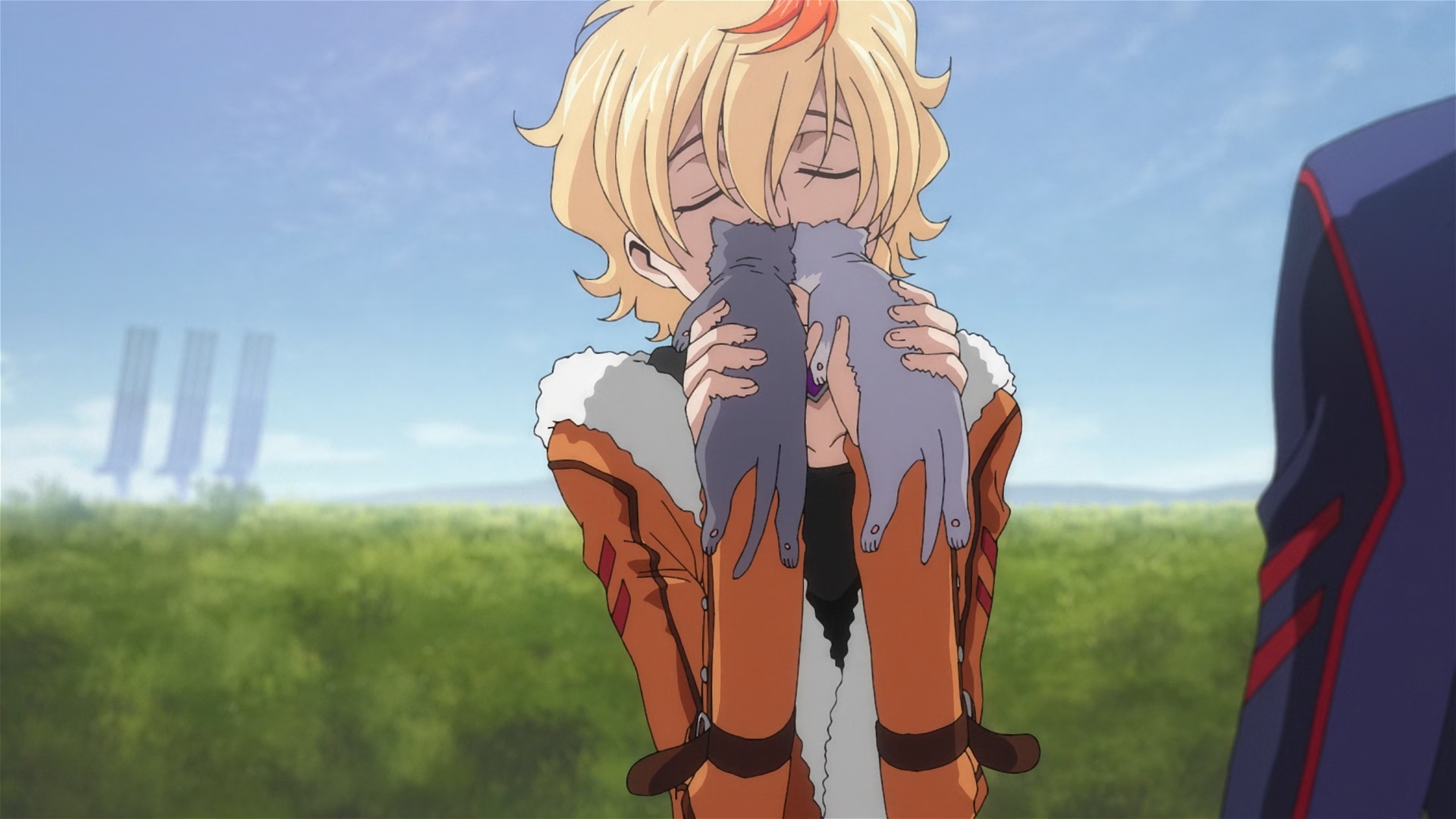
Code Geass: Rozé of the Recapture Parts 1-4
Lelouch vi Britannia has passed his Geass, a power that forces those that it’s used against to obey a single order, to the daughter of Hokkaido’s assassinated governor. Sumeragi Sakuya launches a campaign along with the resistance in Hokkaido against the newly installed Neo-Brittania, in an attempt to rescue her body-double and friend.
Euri’s verdict: Running in my head, running in my head, running in my head, running in my
I think I agree with what Jonathan Clements said in his intro for this – that “movies” that are just twelve episodes stapled together shouldn’t be eligible for SLA. That’s not a slight at Code Geass, this was actually a pretty decent watch, but at a film festival? Yeah, I don’t know about that one.
I have seen the first two seasons of Code Geass so I was vaguely familiar with the state of the Britannian empire, but the 16 years between season two and now meant I’d forgotten all the minor stuff. Honestly though, while there are a lot of nods to the events of season one and two, Rozé of the Recapture is stand-alone enough that you’ll be able to enjoy what it’s doing even if you haven’t seen any of the older material.
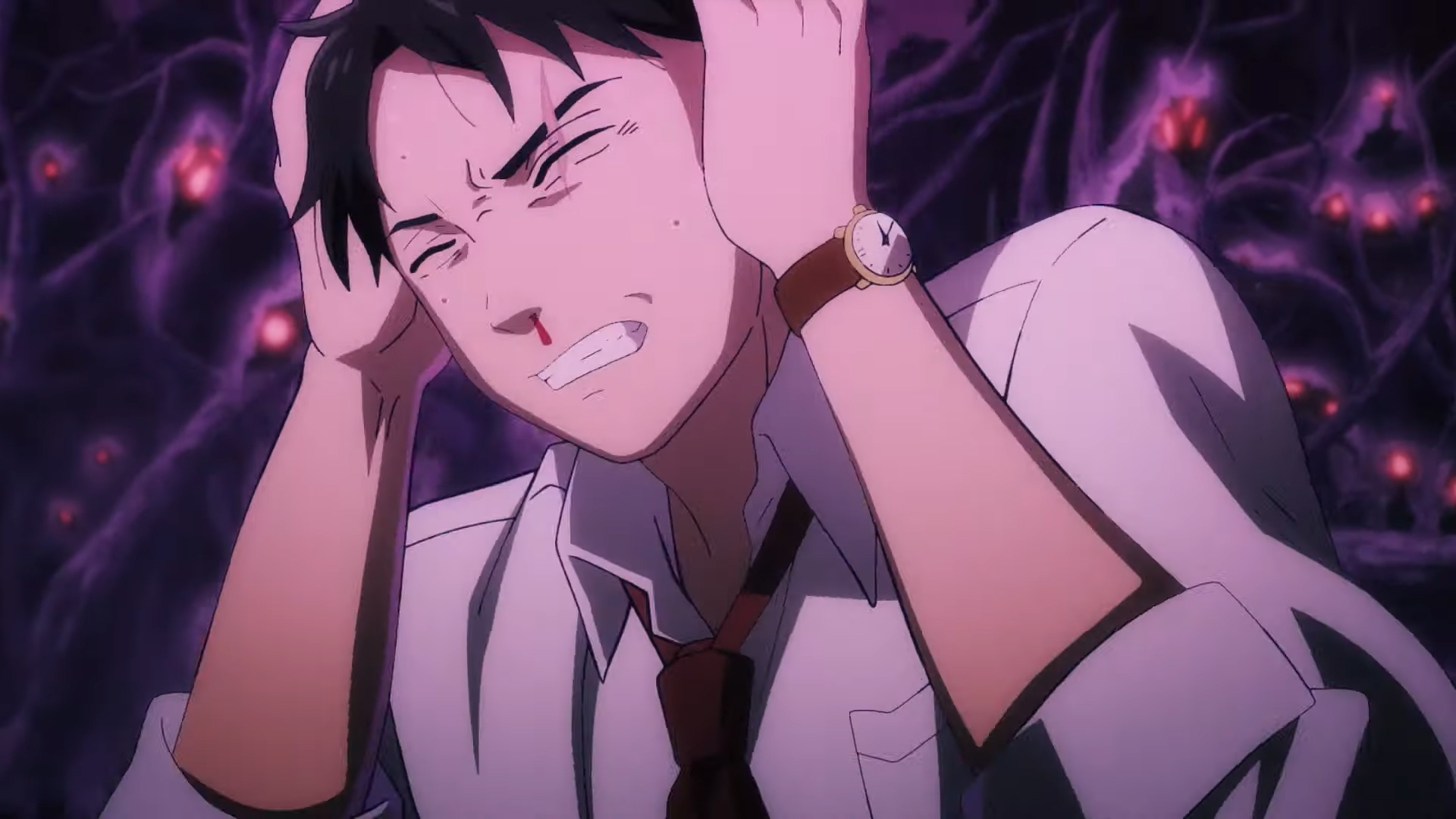
The Birth of Kitaro: The Mystery of GeGeGe
A salaryman named Mizuki convinces his boss to let him travel to a mysterious village, where the family head of one of his clients has recently passed away. Mizuki wishes to encourage new business opportunities with who he believes will become the next head of the family, with the hopes of learning more about the mysterious drug called M that the family produces.
Peter’s verdict: An interesting introduction
Mizuki Shigeru’s GeGeGe no Kitaro, earlier known as Hakaba Kitaro, has been around since 1960, with the first anime series in 1968. Since then, the franchise has continued on in various forms, surviving its original creator, who passed away in 2015. Despite my never watching or reading any of the previous works in the franchise, I entered the theatre with reasonable knowledge of the characters and general setting purely from osmosis. The series is iconic and respected, which makes a prequel origin story an interesting decision.
Despite being an origin story, it works well standalone for the most part, or at least with the background knowledge I’ve gained. It follow’s Kitaro’s father before Kitaro’s birth on a quest to find his wife, along with salaryman Mizuki who befriends Kitaro at the start of the movie. It goes to some pretty heavy places, but manages to not dwell on them for longer than necessary, unlike a couple of very shounen fight scenes which do outstay their welcome. It’s been pointed out to me that, while the TV series that came beforehand was for kids, this film was intended for adults, particularly those who grew up with the older series. Certainly it did feel that way when it comes to the horror elements and themes, but perhaps they could have trimmed the fat a bit with the fight scenes.
A couple of final things to mention:
1) The film was released in two versions in Japan, with the original release in 2023 and an uncut “True Birth Edition” released a year later. It isn’t clear to me what’s different, or which version we saw in Scotland, but I am assuming we saw the uncut version.
2) The character of Mizuki is based on author Mizuki Shigeru himself as a tribute.
colons’ verdict: A structural novelty
This film is a combination of parts that don’t make much sense together and which are executed better elsewhere. If I wanted a slow-burning story about ghostly occurrences in the remote mountains of Japan, I’d go to Mushishi. If I wanted a story about unspeakable otherworldy violence happening to men who weren’t supposed to survive the Pacific War, I’d go to Godzilla Minus One. If I wanted a heterosexual romantic tragedy story about a newcomer in a community with strange customs, then… actually, I don’t know where I’d go for that. But I’m confident I could do better than this.
In traditional movie storytelling, when there are multiple storylines happening simultaneously, a film will try to wrap them all up at once in a climactic scene, bringing the film’s themes together when the tension is at its height. I would even argue this is a characteristic quality of the feature film as a medium; while all the events are still in your short-term memory, a film can show you parallels and contrasts between things you would never have otherwise considered together.
Birth of Kitarou does something else. There are two climaxes, one after the other. One happens on the second-lowest floor of an underground complex, the other happens on the lowest. The first deals with the sexual trauma of the romantic interest, and the latter deals with the wife-related trauma of the buddy character. Both are gruesome shounen boss battles, and both are justified by the gruesome suffering of women with close to zero agency. Granted, they are tonally quite different from each other, but they left me wondering why these two stories were in the same film to begin with.
Perhaps this would be more gratifying to someone familiar with the original material, but I did not find a lot to enjoy here. There is at least one really cool fight scene, though, so there’s that.
Euri’s verdict: Well…
I had a loose familiarity of GeGeGe no Kitaro before watching this movie, but I know it as the kids TV show with the earworm opening theme that’s in every Japanese rhythm game, and not as, well, this. That’s not to say it’s bad, but despite being told ahead of time that this was a gnarly movie, I couldn’t quite separate it from what I knew about it as a kid’s show.
There are topics in here that are not for the faint of heart. It’s not gruesome or even scary, really, but it handles very heavy themes that you wouldn’t expect from any kind of kid’s TV spin-off. How well it handles those themes is up for debate, but I didn’t hate this movie; I just remain baffled about why they gave it such heavy content, even if they’re targeting an audience that has now grown older.
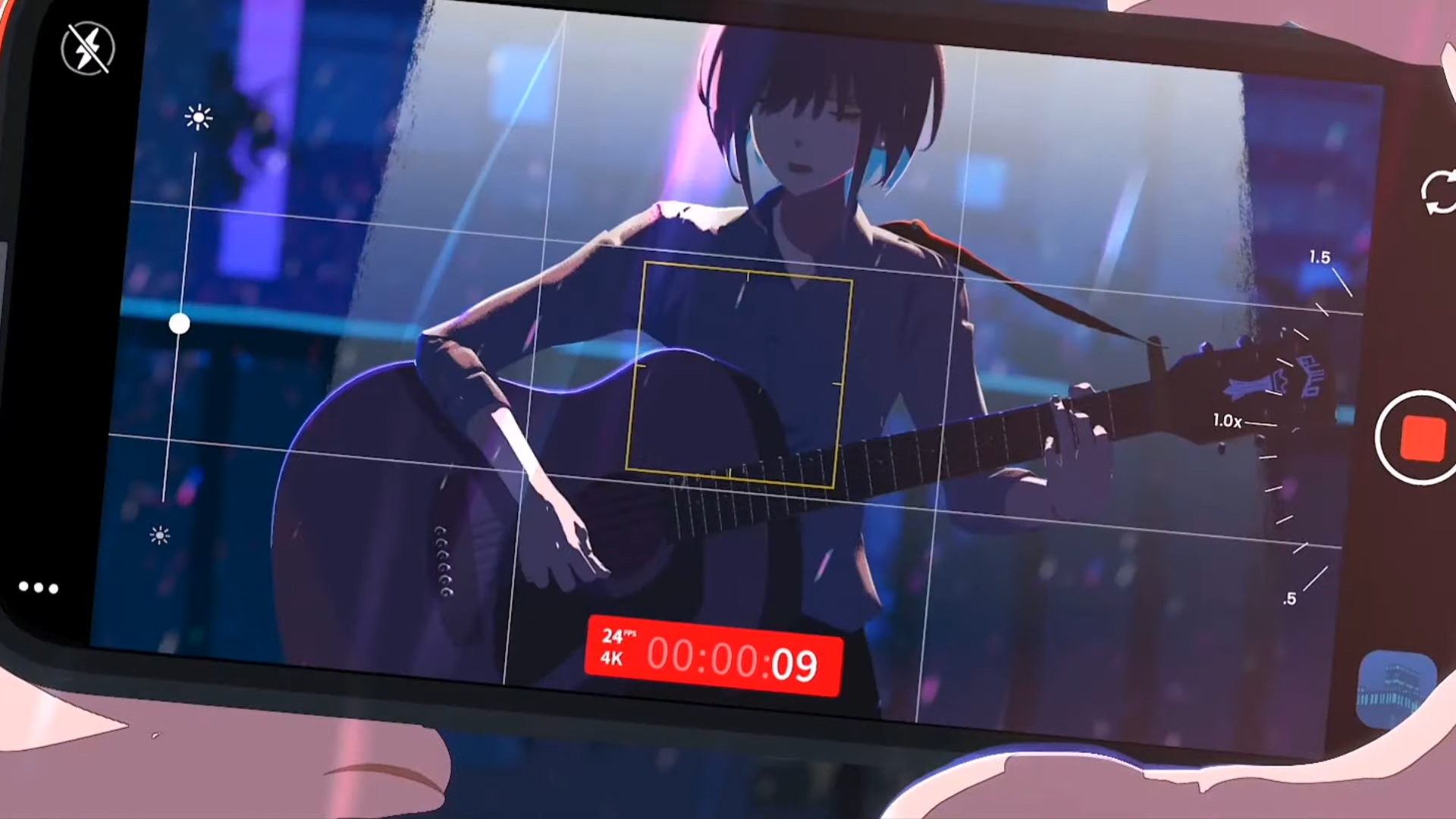
A Few Moments of Cheers
A kid makes animated music videos as a hobby, as well as for some people at school. He one day hears a song being performed in the street and is hit by inspiration to make a music video for it, he just needs to track down who the artist is and get the full song. Easy right? Well, what if the singer is his new teacher…
Peter’s verdict: Made with love and care for yourself
This is a film about making animated music videos made by a studio who makes animated music videos. It’s visually beautiful, with the attention to detail you’d expect from people who really love what they do, down to the Blender/Clip Studio interface being represented in 3D around our protagonist. The textual story isn’t much to write home about, but the real story is a love story for the creative process. I don’t think I can say much more about it. However, I can talk about the director and the recorded Q&A that happened afterwards.
The director of A Few Moments of Cheers is Popreq (sounds a bit like paprika) who insisted that they be visually represented by a drawn image rather than video of themselves. Honestly a pretty normal thing to request to protect your privacy, or build a character separate to your own identity (see: VTubers). The English side of the Q&A, along with handling the introduction of most films in the festival, was Jonathan Clements as usual. He’s a fairly well respected writer with various books released, I even have one of his books signed myself. However, I think he has, with all due respect, started to lose touch a bit. On a couple of films this festival, including this one, he went into a bit of a tangent about wanting to show us in the audience what these anime creators look like and the creators not wanting that. With Popreq in particular, this was brought up both before the film and in the recorded Q&A, and I explicitly remember in the introduction Clements describing Popreq as “beautiful” and to “give the fans what they want”, and honestly being a bit creepy about it.
Putting aside Clements being weird… actually, I’m not finished, sorry. Popreq’s insight into how he personally motion captured all the characters in the film was really interesting, and shows how much care he put into it. Clements’ response to this was amazement at Popreq doing “even the girls’ movements”.
For real this time, putting Clements aside, Popreq’s detailed discussion on the tools he used, both hardware and software, was genuinely fascinating. Using a mix of iPhones to do some motion capture along with professional motion capture equipment, Blender and Clip Studio, etc, I’d listen to him talk about producing music videos all day.
colons’ verdict: In love with the process
There are criticisms that are easy to make here. The script is a little clunky. It’s perhaps a little naïve about the impact of the kind of art it depicts. But it’s earnest and passionate and shows a love for the craft of making animation on computers that I don’t think I’ve seen outside of meta jokes on social media. They earn it, too; this film is a gem of a production.
It’s a real shame that Jonathan Clements had to dampen the whole thing by being extremely bioessentialist about the idea of performing motion capture for a different gender, and vocally resistant to the idea that artists might not want to show their meatspace faces to the audience of their art.
Kurayukaba
A private investigator sends a child informant he works with into The Under, hoping to learn more about the disappearance of one of his clients. His informant is kidnapped, leaving the investigator to venture into danger himself.
colons’ verdict: The antithesis of Chekhov’s gun
I understand that films can hint at the edges of what they depict textually to imply a greater and more complex world than it’s possible to depict in an hour or two. When characters pointedly remark on these elements in key moments, though, I as the viewer take that as a promise. You, the scriptwriter, have told me that this is an element I am supposed to pay attention to and remember, and implicitly promised to reward me for that attention.
Kureyukaba fails to deliver on its promises.
It feels like the scriptwriter of this film would be better suited to writing lore bibles and drawing maps than setting finished stories within their worlds. I would, earnestly, love to read a wiki or play an RPG about the world depicted in this film. Cinema just seems like a poor fit for the strengths demonstrated in this script. We’ll come back to this.
Peter’s verdict: [verdict cancelled due to falling asleep]
This film looks amazing and has some interesting world building but for some reason I (and many others) fell asleep during this film. I can’t say it was boring, but something about that time of day, in that time of the year, localised entirely within the Cameo Picturehouse sent people to sleep, and I don’t think it’s the film’s fault.
Look, I’m Peter Shillito, I love trains, and this is a film where everyone gets around on steam trains in an underground train network where they stand up and move to another track, it’s right up there in “Peter should really like this” so I need to watch it again when I can.
Euri’s verdict: Definitely worth a rewatch…
…because I also fell asleep during this film. I genuinely think this is something to do with the grainy effect that’s slapped over every scene in this, on top of the fact that it’s naturally a dull and murky-looking movie. I’ll try and give it another go once it gets a proper release.
The Colors Within
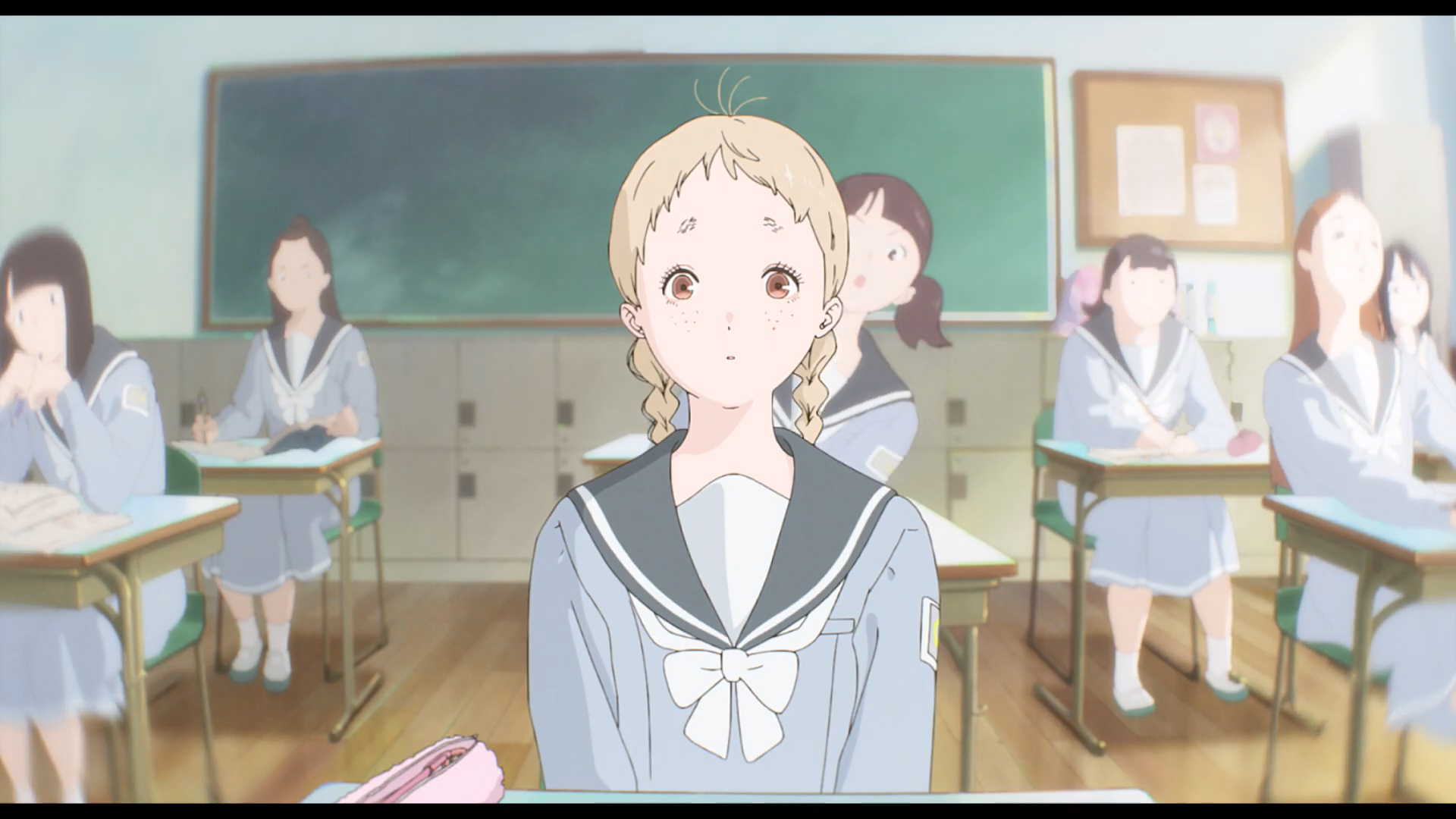
Totsuko, a devout girl who attends a live-in Christian school, has the ability to see the ‘colour’ of people. She becomes enamoured with Kimi, a fellow student at the school, who she sees as a deep blue colour. They eventually start a band together with a local boy, practicing their instruments in a disused church on an island.
Peter’s verdict: Give Tatsuko the castanets
This very much feels like Christian K-On! and in a good way. The synaesthesia element of seeing people as being associated with certain colours kinda didn’t really impact the story much I think, which is a shame as that’s kinda the selling point of the film, unless it was all a ruse to convert people to Christianity!!!
Joking aside, it’s a fairly standard slice of life story about three people forming a band eventually performing at a show. I like the idea of having a story featuring someone with synaesthesia as you can have fun animating their point of view, which this film does do occasionally, but that’s all it really does with it. Having heavy Christian influences is a bit of an unusual set dressing for anime to a point, but it has been done before. There’s certainly some insight taken from prayers and hymns at points, but again it’s really not the focus.
Euri’s verdict: I’m blue (da ba dee)
This was the first standout film of the festival, in my opinion. I’ll be honest, I could leave the religious aspect of it, but The Colors Within is an enjoyable time nonetheless. Totsuko is a very likeable character, and I enjoy the way she’s able to pull people into her orbit with her carefree nature and whimsy. Also, there’s a very solid musical performance at the end.
As a side note, I appreciate how people in the audience went from giggling at the theremin when it’s first introduced, to being fully on-board with it by the end. The next music club anime film is going to have to use a stylophone or an otamatone just to keep up.
colons’ verdict: The wisdom to know the difference
I don’t really have any overarching take here, just a few observations.
We’re told early on that the girls at the school are forbidden from fraternising with boys, but nobody remarks upon this rule having been broken every time the band rehearsed. There’s a scene shortly before the concert where I was convinced they were going to resolve this by having the boy member crossdress, but no, it’s just not addressed. Given the school’s response to other rules being broken, I left the film feeling like I must have missed something.
The Serenity Prayer as a central motif is a fun way to split an audience. I found it pretty jarring when our main character recited just the first part of it (‘grant me the serenity to accept the things I cannot change’), but apparently I’m the only person in our group who was already familiar with it, so the later ‘reveal’ of the rest of the prayer played differently to us. I was also confused that the prayer’s translation gets specifically attributed in the credits, which led me to learn that it’s much newer than I’d realised; it’s from the 1930s.
It’s cool to see someone making breadboard synthesisers in tupperware boxes.
Look Back
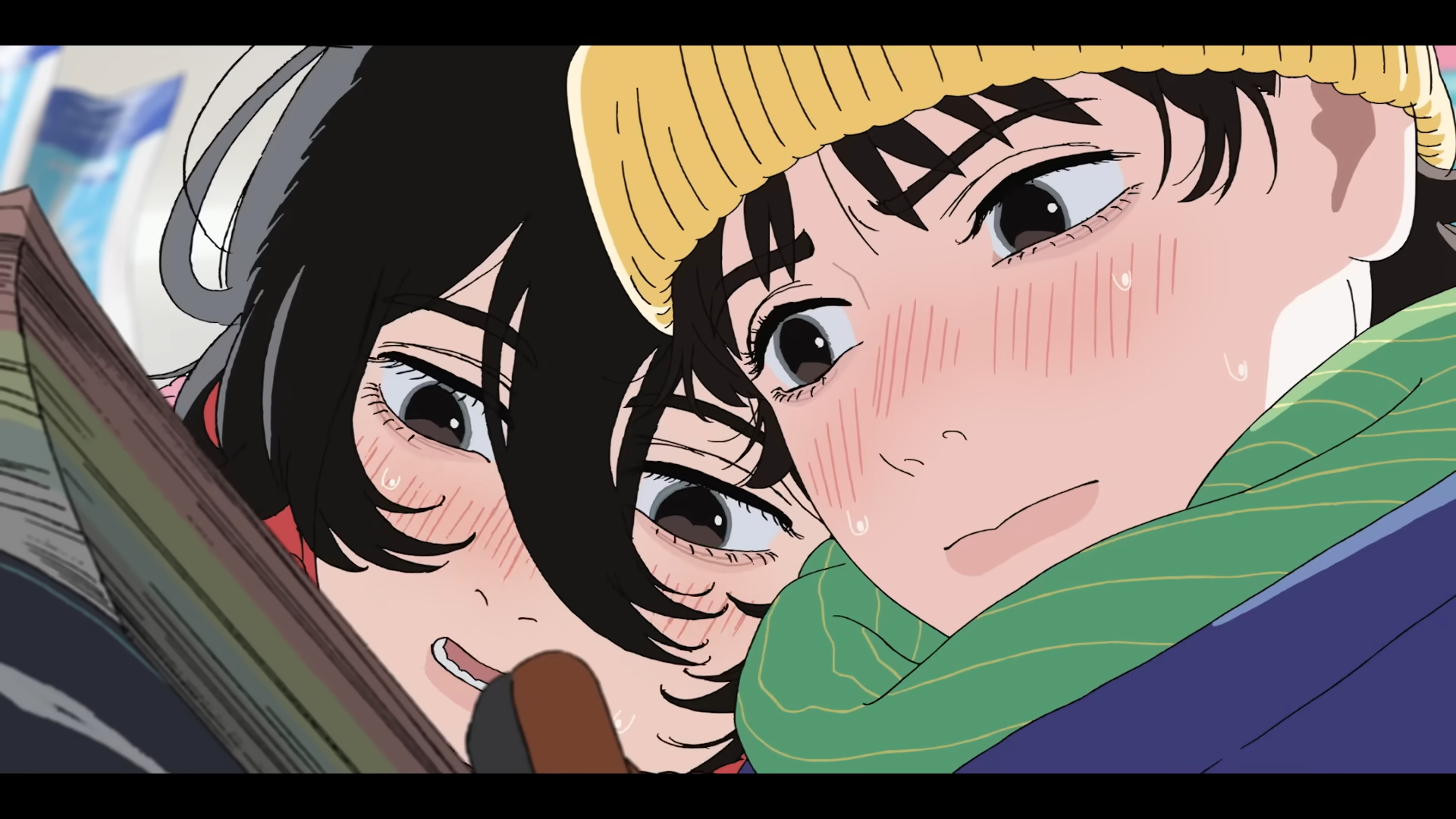
Ayumu Fujino creates 4-panel manga for the student newsletter at school. Kyomoto, a shut-in girl who doesn’t attend school, starts submitting her own manga for the newsletter, causing Fujino to knuckle down and improve her art skills. Fujino eventually quits doing manga, but a chance encounter with Kyomoto leads to both of their lives changing forever.
colons’ verdict: The one (1) film of the festival that was gay enough
The consensus of the crowd coming out of this film seemed to be that it was ‘depressing’, and I sort of don’t understand that take. Yes, it’s a film about sad things happening, and it communicates this sadness effectively, but I found it to be a pretty optimistic view of things, all things considered. It’s a story that wants you to stop fretting about the events in your life where you wonder if things would have turned out better if you’d acted differently. The world is an unknowable web of cause and effect, and you have no positive evidence that the other path would have been better. There is good to find here, despite it all. Focus on that.
It’s also refreshing to see a story where children are allowed to be pieces of shit in the way that children actually are.
Euri’s verdict: An impressive adaptation
I will defer to the write-up from Gee on this movie, but I will say that this movie managed to blow me away despite having read it back when it was released. Knowing what’s coming doesn’t take soften any emotional blows, that’s for sure.
Peter’s verdict: Am I dead inside?
I didn’t get emotional from this film. It’s interesting, don’t get me wrong, and it certainly says something about the mind behind Chainsaw Man, but it just didn’t click with me, not when you get less than an hour to do this whole thing. That being said, I think many in the audience had read the manga already, and I know from experience that knowing the original before watching the anime can drastically affect how you feel about said adaption, so I wonder if anticipation of the climax of the story helps there. Either way, sorry, but I found this film mid at best.

Sand Land
In a post-apocalyptic world, water has become increasingly hard to find for both humans and demons alike. The human king, who seemingly has a large supply of it, has been selling it to his own subjects. Sherriff Rao believes there to be a spring nearby due to the presence of certain birds, so he approaches the demons with the hope of teaming up to find it. Rao is joined by Beelzebub, the son of the demon king, and Thief, a thief.
Euri’s verdict: 7.8 not enough water
I’ve admittedly been a bit baffled by the spike in interest surrounding Sand Land, nearly 25 years after the single volume of manga was published. It’s no surprise to see more fanfare following the death of Akira Toriyama of course, but the Sand Land projects were put into motion long before his passing. Perhaps it’s just knowing that products with his name attached still sell, but a movie, an extended anime series featuring new story beats, and even a video game? It just feels like a lot coming seemingly out of nowhere.
Nonetheless, I didn’t dislike the manga when I read it 15 years ago, and the film is an equally fun experience. I do wish that the main characters hadn’t been relegated to 3D models, but despite that it’s a decent adaptation and worth a couple of hours of your time. Unless you want to watch the TV series instead, of course.
Totto-chan: The Girl at the Window
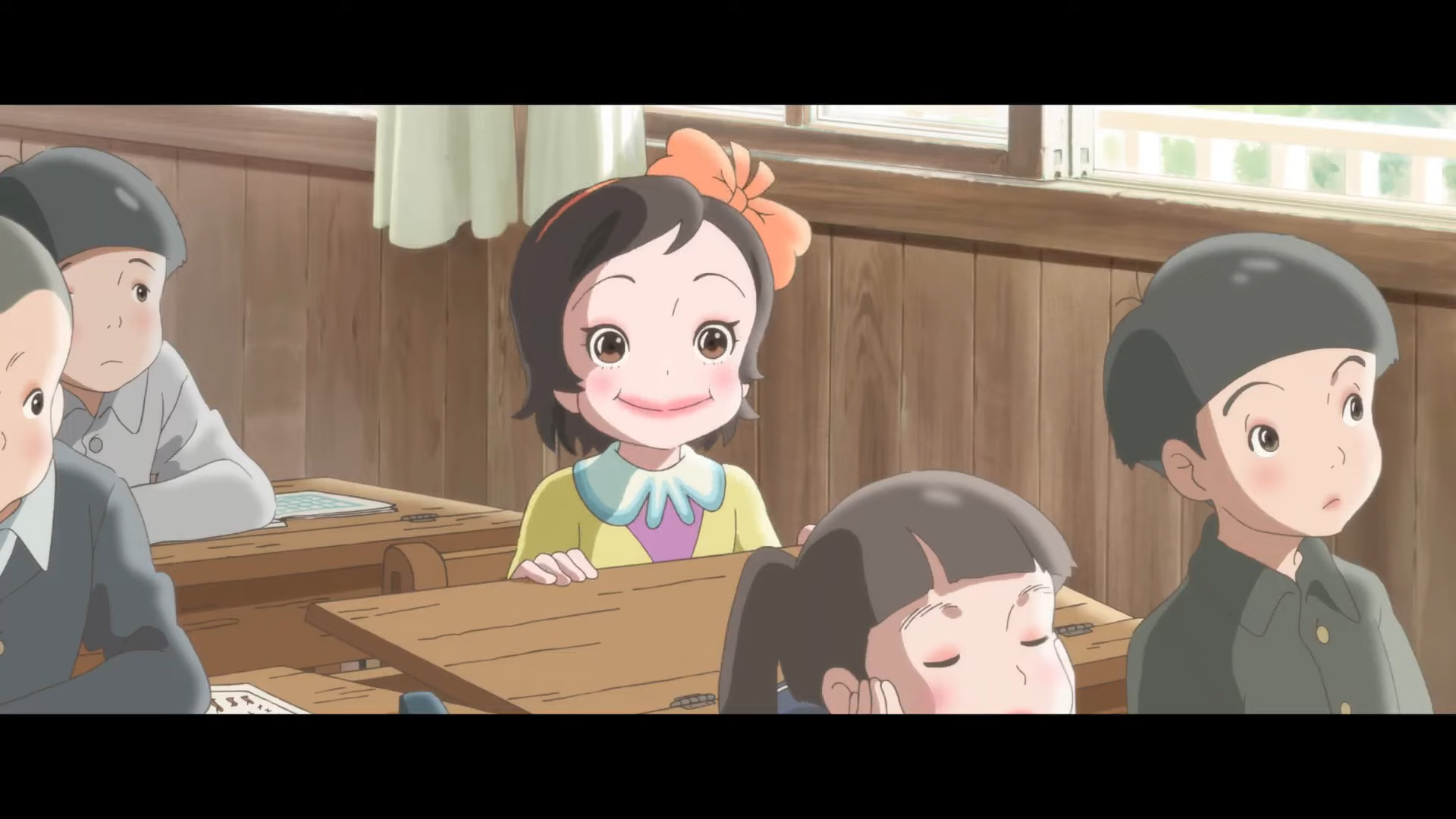
Based on the biography of Kuroyanagi Tetsuko, Totto-chan tells the story of how a neuro-divergent young girl grew up in Japan during the second World War.
colons’ verdict: Oh, for a world with this kindness
I think I would have been very surprised to learn that this was a biopic had I not known it in advance. As told, this is a story where events take place in the kind of poetic sequence that can only be true of real-life events as abstracted through multiple retellings and rememberings. Everything happens for a reason. Everything teaches an important lesson. I wouldn’t say this is a criticism, necessarily; just a thing I found slightly distracting.
I am bitterly jealous of anyone who got to go to a school run by someone like Sosaku Kobayashi.
An aside for Jonathan Clements: it’s tiring to hear you call every creative person you talk about a ‘nutter’. It seems like the problem might be on your end. In this case, though, that choice of words was particularly insensitive, since you then went on to talk about this film’s handling of neurodiversity as it relates to the nutter who serves as our title character.
Peter’s verdict: TRAIN CLASSROOM TRAIN CLASSROOM TRAIN CLASSROOM
Japan’s work culture is quite different to that in the West, particularly when it comes to hiring and firing. It’s notoriously difficult to fire employees in Japan, to the point where large companies have special rooms where people they want to fire have to work miserably in until they quit of their own accord. However, some Japanese companies put lower performing employees by the windows, so they can be left alone and away from the busier middle desks. This practice is what the title of the film (and book) is a reference to, where someone who “sits by the window” is a failure (I looked for a good source for this, and the best one is this review of the book from The Times in 1982 which is also the source Wikipedia uses). As Susan Chira says in that article, this book (and film) is very much a way of saying that Totto-chan wasn’t left by the window, but had her needs catered for, which allowed her to become the successful person she is today, where she’s hosted a TV show every weekday for 49 years straight.
So we come to the story itself, where a neurodivergent kid gets kicked out of school and finds a specialist school (known in the UK as a “Special Education Needs (SEN) school”) for kids who need that extra help: Tomoe Gakuen. The story as a whole is a great promotion for actually listening to kids, and catering to them directly, because one size doesn’t fit all when it comes to education.
There’s also the war element, where World War 2 is ongoing in the background, with its influence steadily growing in the film, but in contexts where Totto-chan wouldn’t recognise it as such. The war comes into focus later in the film, but by and large this is not a film about Japan at war, it’s a film about people who are in Japan while Japan is at war.
The Totto-chan book became a textbook in Japan, while Kuroyanagi herself has done countless charity events and formed her own foundation for training deaf theatre performers, herself performing in sign language at some events too. Seeing how she was supported in her childhood in this film, I can fully appreciate wanting to give back in all the ways she does, and I recommend this film to everyone. I’m going to pick up the book for sure.
One last thing, and sorry to bring up Jonathan Clements again, but in the introduction of the film he explained that Kuroyanagi was neurodivergent, but then in the next sentence called her a “nutter”. Really not a fan of that.
Euri’s verdict: A must watch
Honestly, I’m still shocked that a true story about neurodivergence, set before and during the Second World War, can actually be a positive one. There’s plenty of laughter and happy tears to be had here as the movie recounts the childhood of Kuroyanagi Tetsuko, and watching just how much this learning environment meant for her and the other children who attended.
It’s also genuinely interesting to get a bit of insight on what the build up to the war meant for a kid who doesn’t understand what’s going on politically. There’s no glorious Japan to be had here; just a normal family dealing with their country going to war.
Jonathan Clements mentioned in his introduction that the school principal had also written a book. I would love to read that, as well as the book this movie is based on. Something for my Christmas list, I think.
Kuramerukagari
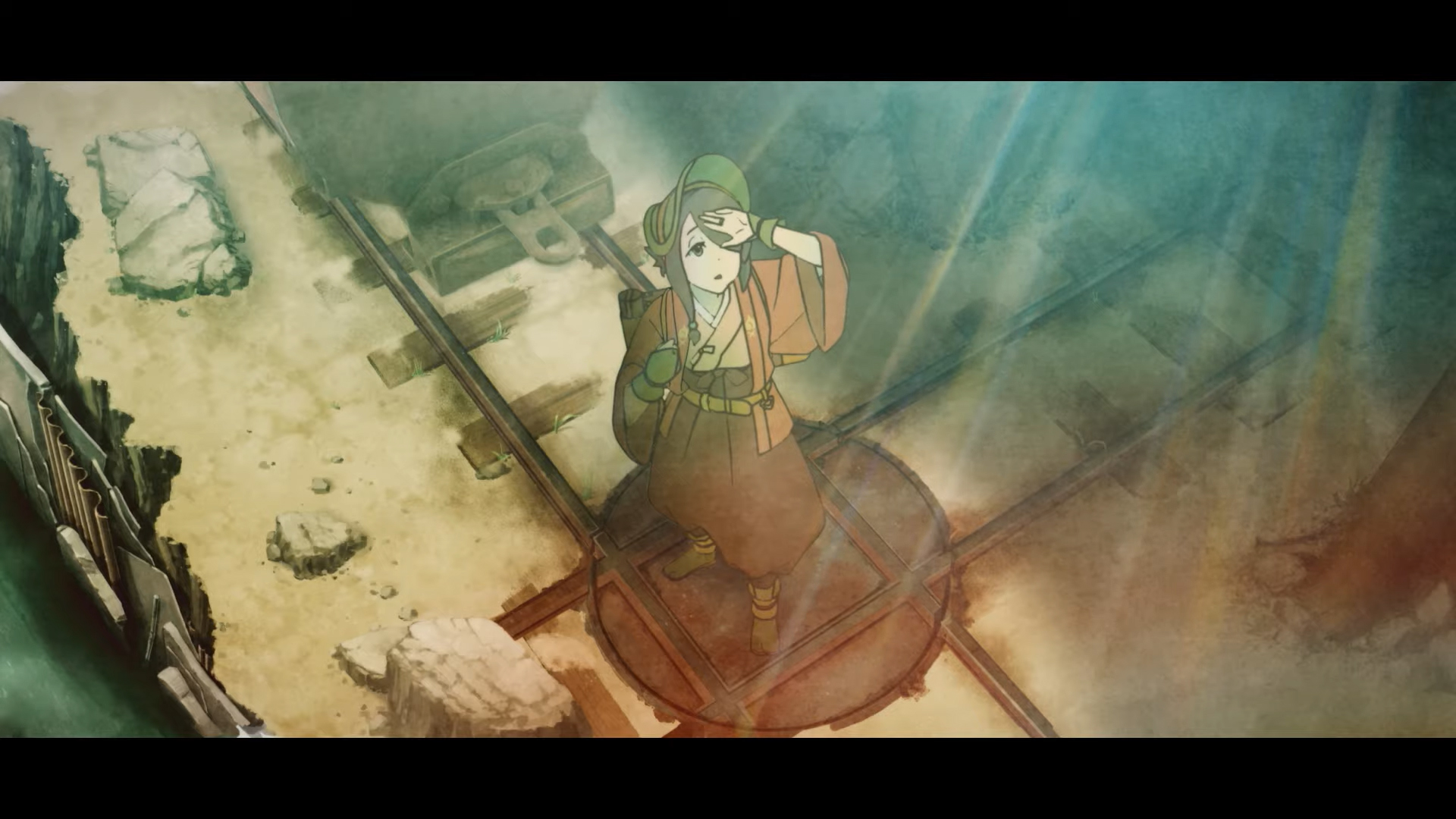
Kagari makes a living making maps of the mining town she lives in; the ever-changing landscape of it proving lucrative for her. Deep chasms have been spontaneously opening up around town, so-called ‘moth holes’ that bring both uncharted territory and danger.
Peter’s verdict: Cartography is moe
This world that’s been built is fascinating and I want to explore it more. At some points it feels like a very literal adaptation of an old school dungeon crawler as you explore and draw maps as you go because the game doesn’t do that for you. I really enjoyed it, as well as the short that came before it too (which I hope always comes before the main film to be honest).
Euri’s verdict: I liked the hole movie
I didn’t fall asleep during this one, though admittedly it was a bit touch and go again. I promise that this isn’t commentary about the quality of the movie – there’s just something about the art style and the cosy cinema setting. Anyway.
This is the movie that better sells the idea of the world the director has come up with, which is interesting because it was also written by a different person. Granted, the writer is the author of Baccano! so you’d certainly hope it’d be good. Saying that, I did find myself more interested in the world building and the dynamics of the people and the factions within it, rather than the core story the movie tells.
Also, Nene the Jerboa is the best character, and she isn’t even in the movie.
colons’ verdict: A story this world deserves
I came out of Kurayukaba feeling like I was interested in stories set in its world, just not the one we saw. I felt like this world could benefit from the hands of a different writer. Kuramerukagari is just such a story. It has themes, it has setup and payoff, and it has the unique central element of subterranean cartography as dangerous exploitable work in an information vacuum with complex power dynamics.
Also, the ending theme is a banger.
Ghost Cat Anzu
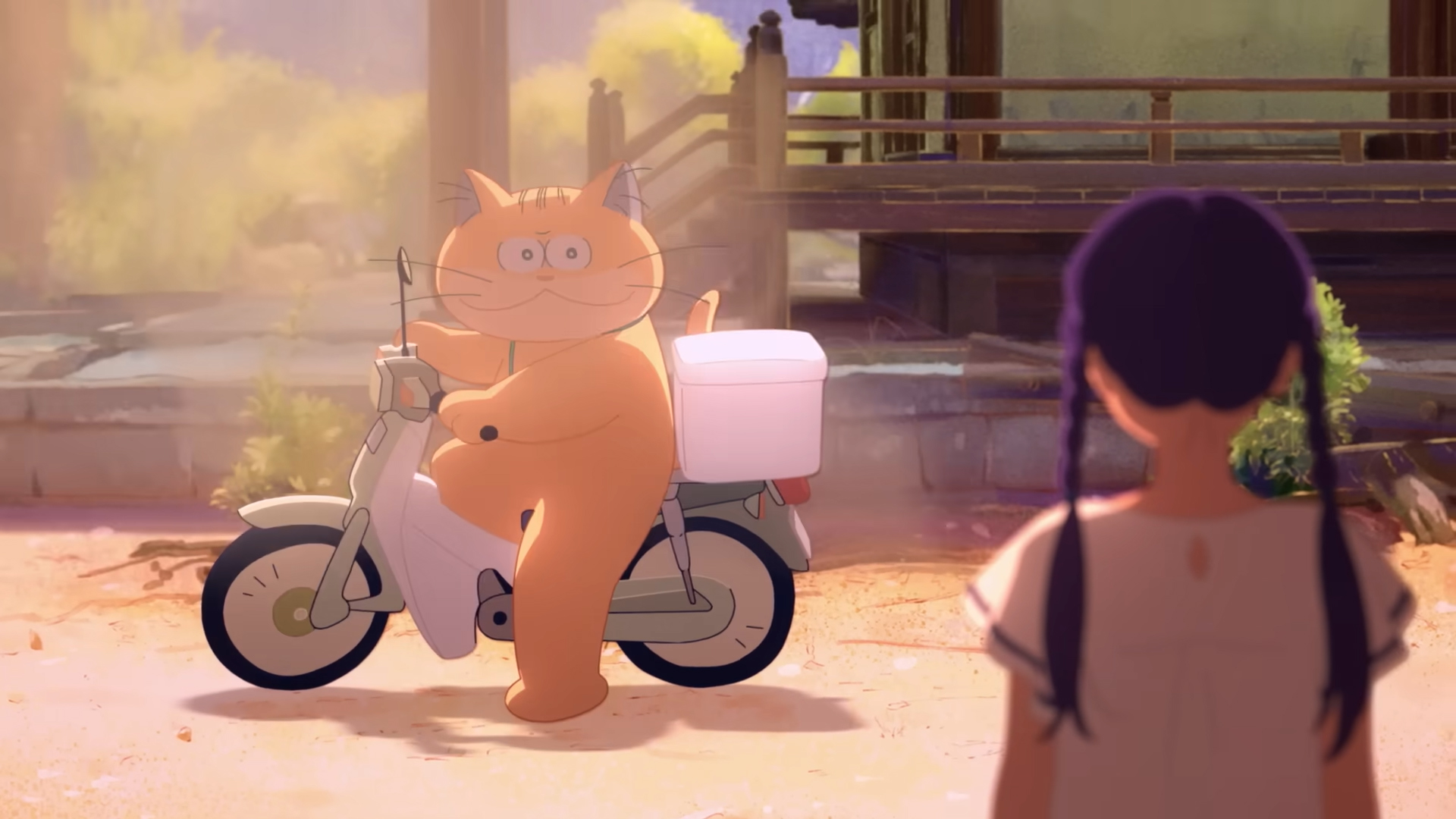
A young girl named Karin has been left at her grandparents place in the sticks, with only her grandfather, the local kids and Anzu to keep her company. Anzu is a human-sized ghost cat.
Euri’s verdict: Fart joke
This was fine, but similarly to Kuramerukagari, I found myself more interested in the world building than the story on offer. I like that Anzu is just a guy who can’t stick a job and spends his days fishing and drinking – he just happens to be a human-sized cat spirit. But that ridiculousness is also where his character begins and ends. It’s absurd, but that’s it.
I don’t really care for a story about a grieving kid who misses her mum – I want to see 4-minute shorts about Anzu shooting the shit with his yokai pals. I guess I’m curious if there’s any of that to be had in the source material.
Peter’s verdict: Speak up!
I don’t have much to say about the story other than it’s kinda nothing until it’s everything towards the end. I can’t say I think that much of it.
However, I do think the production is both interesting and shoddy at the same time. The animation is a nice style, and it’s all rotoscoped, which I have no issue with (no major impact visually), except it was also produced as a live action first. This means most characters are voiced live on-set by J-drama actors, rather than typical anime voice actors, which results in very bland performances by most characters and pretty poor audio quality at times too.
colons’ verdict: I have no useful thoughts
I think this film is a fun gradual escalation of the supernatural as it imposes itself onto some citygoer’s life. I suspect it does a good job of surprising the unsuspecting viewer as each new layer of magical machinations is revealed. We start with one fairly pedestrian ghost and end up taunting unknowable powers.
Unfortunately, I cannot confidently comment on the effectiveness of these reveals, because Jonathan Clements told us in the introduction what the final escalation would be. My experience of this film was thus devoid of surprise or wonder, as I instead simply waited at the top of the slope while the film trudged its way up, pointing out new elements of a vista that I had already seen all of.
Trapezium
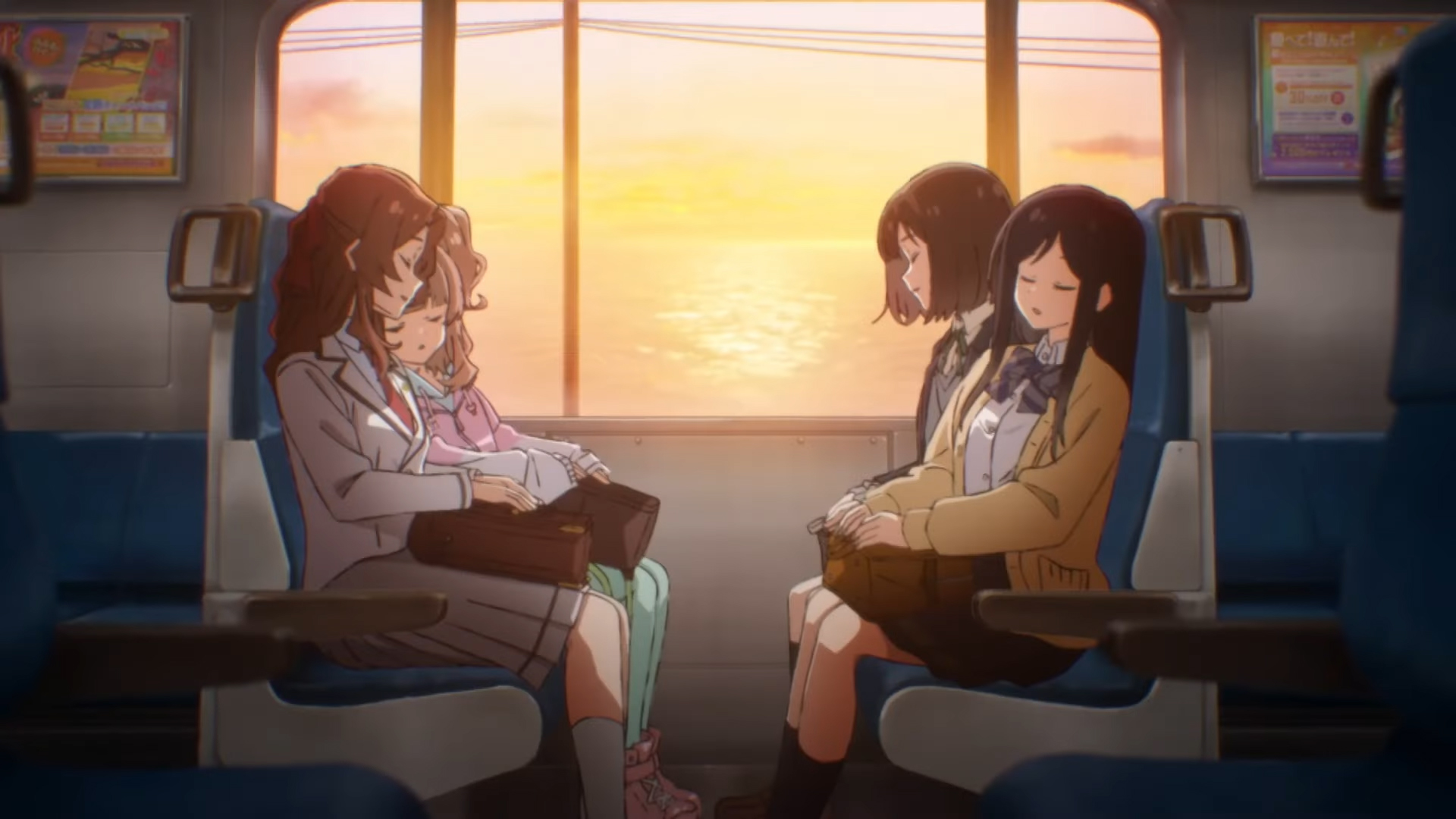
Azuma Yuu is determined to become an idol. She devises a plan to befriend girls from local schools in the north, west and south, as she attends a school in the east, then make them all popular enough to become an idol group.
Peter’s verdict: “It’s supposed to be disappointing”
Imagine a whodunnit like Knives Out or Murder on the Orient Express or House MD but then you move the reveal from the end to near the start so it has no impact, and then when things go wrong and the jig is up later in the film, it doesn’t actually matter. That’s the sort of let down this film has. People saying it’s their favourite film from the festival “because that’s the point” I don’t understand at all.
Now, since this story is written by an actual idol, and despite the insistence that it’s not based on any real people, it’s almost certainly inspired by real people. I could believe that the lack of a satisfying resolution or consequences for our main character is a reflection of a lack of consequences for a real manipulative idol that the writer knows, or more generally in that industry. Unfortunately, it just feels like giving up on your actually biting commentary and sticking to a fairly standard idol movie.
colons’ verdict: Is this what representation feels like?
I am fairly confident that my interpretation of this film is not what its creators intended. I have not read the book (yet), and it may contain details which bolster or debunk my reading. Either way, I’m going to spend some time trying to justify my reading, and then I’m going to tell you why it resonated with me so well.
The manipulation depicted over the first half of this film and implicitly revealed to everyone at its midpoint is staggering in its scope. While I don’t think it’d be impossible to resolve the rift that would be created by such a revelation, I do think it would take work that we do not see on screen, and it would fundamentally alter that relationship in ways that are not depicted.
The failure to resolve this betrayal is an absence that feels like a splinter. Our central friendship is revealed to have been founded on manipulation from the start. This causes some minor friction, but things mostly just continue as they were and we are never reminded that any of this happened. The events, as depicted, simply do not make sense if you read them literally; neither the viewer nor the characters can forget what they now know. It is never properly addressed. There’s a hilltop sing-along scene which masquerades as the resolution of this tension, but it doesn’t contain any closure on the substance of the problem for anyone involved. Everyone just pretends it’s already been dealt with.
Emotions have a remarkable ability to alter perspective. Anger will make you express the worst possible interpretation of events. Any perceived character flaw can be read as a fundamental moral failing, any habit as a malicious erosion of sanity, any curiosity as undue suspicion, any heated comment as an indication that someone has been out for you from the beginning.
After the outburst that marks the midpoint of this film and its subsequent no-selling, I am only able to read the events depicted in the first half of the film as exactly the kind of worst-possible reading of circumstances that only make sense to someone who’s emotionally invested in that reading. It’s precisely the kind of cartoonish evil that an angry brain will construct behind a single hurtful comment.
In my reading, therefore, the manipulation we see in the first half of Trapezium cannot be what actually happened. If the literal events do not make sense, they must be the perspective of some unreliable narrator. The first half of the film is what you would have to assume happened if you took Azuma’s angry outburst as literal and absolute truth.
Azuma is not without sin here, of course. The literal reading doesn’t make sense, but neither does a reading where the manipulation is entirely made up. While anger does cause people to focus on the worst, that worst does have to be there to focus on; Azuma’s assertion that this friendship would never have existed had she known that Mika had a boyfriend did not come from nowhere. But it’s also not the whole truth; it’s stubborn angry brain logic.
I suffer from a kind of anxiety where my brain is constantly inventing exactly this kind of bad-faith interpretation of my own actions to throw at me. As a result, I find the splinter left by the absence of a resolution here viscerally familiar. There is part of me constantly telling me the worst possible version of my own history, and it sounds a lot like the story told in the first half of this film.
To me, then, this film is a parable, reminding me that the stories we tell ourselves in emotionally charged moments are just that: stories. They are influenced by emotions just like everything else we experience. We can paint ourselves or others as villains, buffoons, heroes, or even complacent bystanders, and absolutely none of those will be the truth, because anger lies and the truth is unknowable.
Reflect on your actions, of course, and apologise when that’s appropriate, but don’t create an elaborate justification to repeatedly punish yourself for that one time you said something a little insensitive or inappropriate six years ago. And, of course, don’t hold other people accountable for the caricature of them you constructed in response to a throwaway comment that managed to hit a nerve.
I intend to read the book once this post is out. You’ll have to check for yourself to see if my reading of the film is validated or not. I’m led to understand that there is speculation that the book is a thinly-veiled biography of a former coworker of its author. If that’s accurate, then the book might be exactly the kind of caricature that I have read this film as criticising.
Oh, also, if you can help it, do not watch this film with people who find queer stereotyping inherently funny. This is probably one to do alone or with people you trust.
Euri’s verdict: Sure is idols in here
This was not a movie for me. I’m down for the first 60-70% of the movie, but I need some repercussions for Yuu being an asshole and massive manipulator. I don’t really care whether that’s her losing everything, her earning redemption, or some Light Yagami turn-to-camera moment to just cement in the douchebaggery, but I don’t buy for a minute that the three other girls would just be all ‘no worries’ about the situation.
Heck, in the scene where Yuu is upset at her friend for having a secret boyfriend, why was she not called out on the very loud “I would never have been your friend” comment? Don’t understand, head hort.
Also, Yuu documented her master plan in a notebook. I would love to have seen the other girls get their hands on it, and to see their reaction to it all. I dunno, man. This was a very polarising film on the day, but I don’t see the positives myself.
—
The Third Legally Binding and Very Scientific™ The Glorio Blog’s Film of the Festival
Look if we don’t tell you what our favourite was then what’s even the point? Here are our picks!
colons’ pick: Trapezium
My intentional misreading of this film is a story that resonated with my particular anxieties in a way that perhaps nothing else could have or ever will.
Euri’s pick: Totto-chan: The Girl at the Window
There were some quality films this year that were fully qualified to take this spot – The Colors Within comes to mind immediately – but the film that has been stuck in my thoughts since SLA 2024 concluded is Totto-chan. A true story about a group of neurodivergent kids getting the help they need to flourish is, honestly, just a great thing. It has laugh out loud moments, incredibly sad moments, and profoundly touching moments. I can’t recommend it enough.
Peter’s pick: Totto-chan: The Girl at the Window
I feel like Totto-chan is the film that has stuck with me the most from the festival, even though there was nothing actively *bad* this year. I want to learn more about Kuroyanagi Tetsuko, read the book the film was based on, read the other books from people mentioned in the book, etc. I actually feel bad not knowing about her before, though I suspect there has been at least one parody in an anime that’s gone over my head. That shouldn’t happen again!


 The Glorio Blog