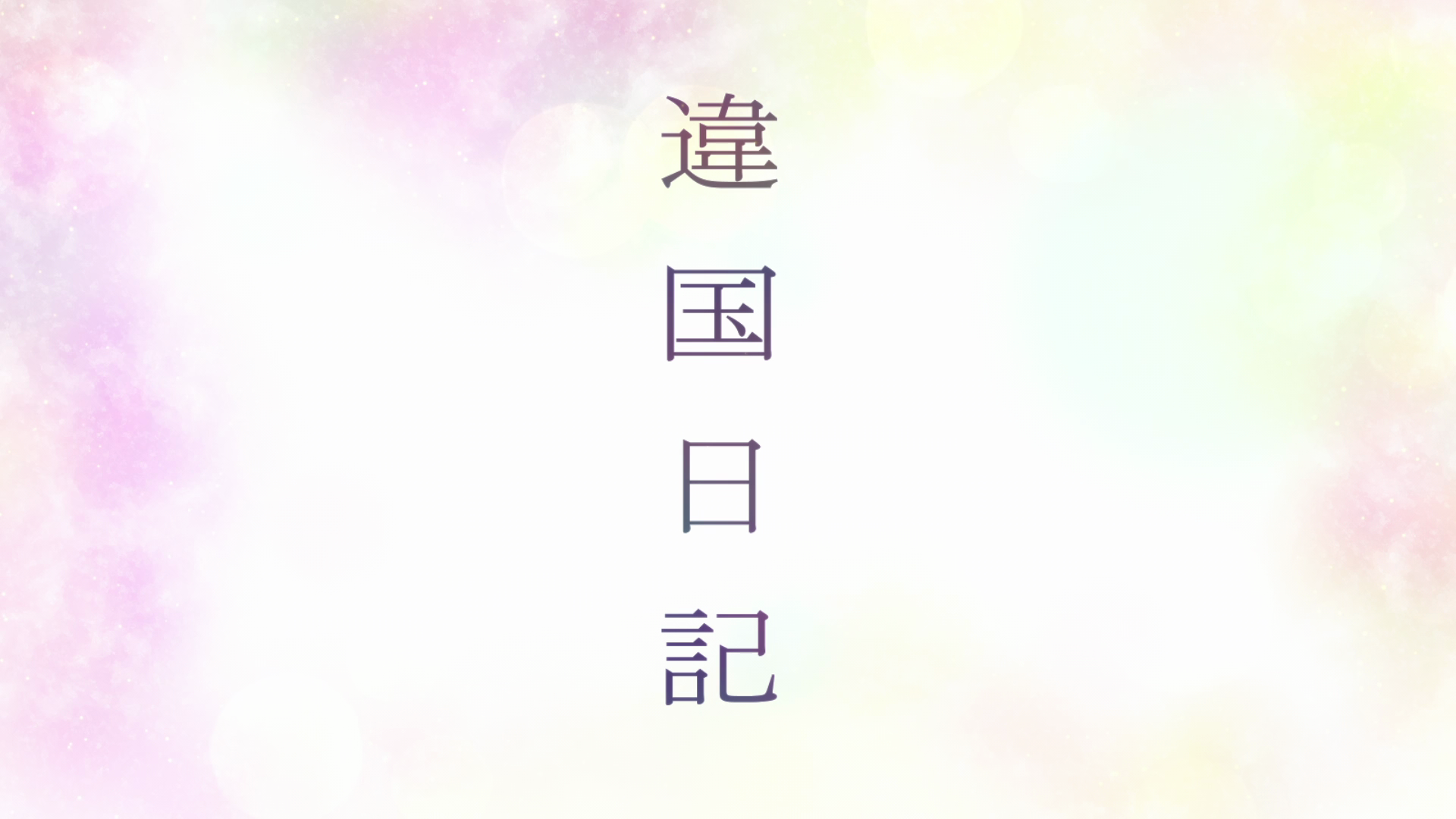
Alternative title(s): Ikoku Nikki
Manga Adaptation by Shuka
Streaming on Crunchyroll
Premise
When her parents die in a car accident, fifteen-year old Asa Takumi has nowhere to go — that is, until her estranged aunt Makio shows up. Despite a strained relationship with her family, in particular with Asa’s mother, Makio is determined to give Asa a new home and takes her in. This takes some getting used to for Asa, who decides to start chronicling her experiences in a journal.
Aqua’s verdict: Too Good for a Smarmy Joke
Toads, beetles, bats upon whomever decided for the name of this show to be localised as “Journal with Witch”. It’s a trite, borderline meaningless and alienating translation of its original title, creating the impression that this show is the very antithesis of what it actually is. Contrary to what this translation implies, Journal with Witch is neither a fantasy anime, nor a low-effort hatchet job, but a stunningly honest adaptation of a poetic and mature work that has more in common with a contemplative art-house film than with the melodrama and excess we usually come to anime for.
This alone probably makes Journal with Witch a tough sell for those of us who come to anime for high-octane action and colourful escapism. One could wonder if a story like this wouldn’t be better off in a medium more reflective of is strengths; and indeed, at first the slow pacing, telling moments of silence, subdued performances and deliberately muted hues in Journal with Witch seem to go out of their way to avoid the boons of animation as a medium altogether.

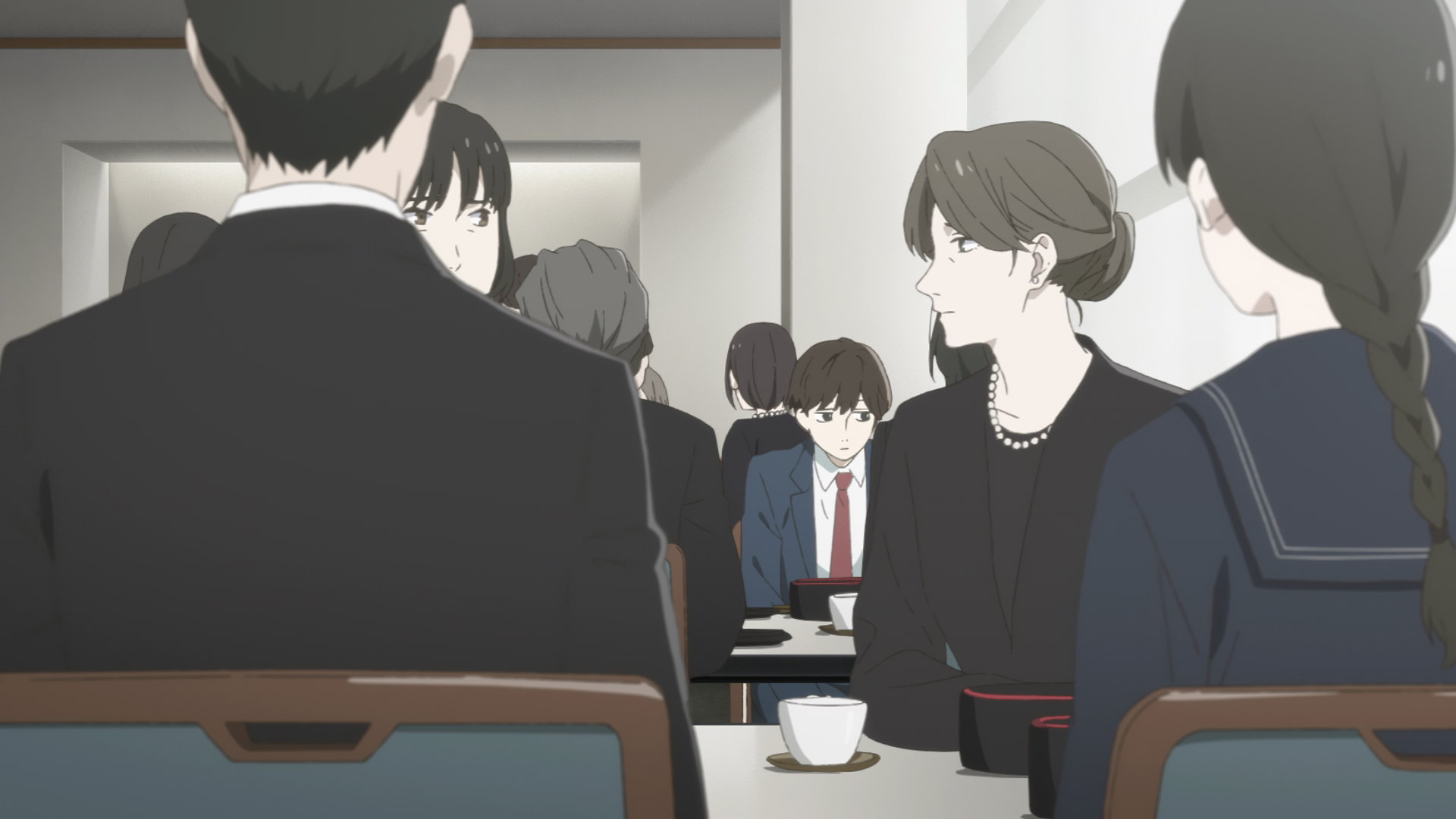
Upon more careful reflection, however, it becomes obvious that director Miyuki Ooshiro speaks the visual language of anime just as well as some of her flashier peers. Matching the subtleties of the writing, the animation hides behind its mundane veil a wealth of signifiers only the art of illustration can properly convey, from the subtle warmth of the pastels inside Makio’s apartment contrasted to the clinical greys of the funeral home, to the juxtaposition of the aunt’s jagged and jaded roughness against Asa’s rounder, more youthful features. Strong performances by veteran Miyuki Sawashiro (Makio) and relative newcomer Fuuko Mori (Asa) similarly say a lot by saying very little, and further add to the cinephile aesthetics that make Journal with Witch stand out.
With excellent scene traditions — including one particularly memorable cutaway from a potential copyright infraction — this adaptation additionally bookmarks some of the smarter choices it makes in bringing the source material to life. Ooshiro, who previously cut their teeth on Natsume’s Book of Friends, cleverly avoids a major pitfall of quiet shows like this one, chopping up key events in the heartbreaking circumstances that bring Makio and Asa together and rearranges them for maximum emotional impact.
Nevertheless, Journal with Witch wisely doesn’t try to tug at the heartstrings too ostensibly. Instead, much of the drama in this story arguably comes from the ambiguity in the character’s emotions — or lack thereof — in contrast with the world around them. Makio’s lack of decorum and disregard for social niceties are the most prominent source of friction, her bohemian lifestyle a far cry from the stifling middle-class upbringing that Asa must have undergone. It’s this foreign experience that ultimately inspires Asa to write her journal, as well as the title of the show — Ikoku Nikki literally translates to “Journal of a Strange Land”, after all — making the decision to have this thematic resonance be lost in translation all the more baffling.
Another reason why a title like “Journal with Witch” just doesn’t work for this anime is the fact that it centres the titular “Witch” entirely. It posits Makio as a specimen for observation, whose strange behaviour makes up the bulk of the journal’s content, and downplays the importance of the writer’s experience. That, once again, simply isn’t what the shown sets out to do, as Asa is just as, if not more interesting of a character than her aunt.
Asa keeps the obvious grief she’s saddled with mostly to herself, stifled by a newfound responsibility she feels towards her aunt and her peers, and her calm acceptance of the fact that her parents are no longer around in lieu of the bawling and moping you’d expect of a character her age is a far more though-provoking kind of emotional appeal than the blunt instrument anime often wields. It’s something I can easily relate to, struggling to reconcile a desire to be emotionally honest with the inability to meet societal expectations for how to express myself.
This complex, but deeply empathetic characterisation of its main players is ultimately what sets Journal with Witch apart from the flock, especially in a season that seems stuffed to the brim with adrenaline-fuelled spectacle. More than its acknowledgement of some of real life’s less glamorous inconveniences — Have you ever seen an anime character complain about the rising cost of green beans? Or heck, acknowledge the existence of Justin Bieber? — the strength of its artistry makes it realer than anything live-action adaptation could ever achieve. With subtlety, nuance, empathy and maturity, Journal with Witch stands out from all the hooters and hollerers vying for the viewer’s attention. A slow simmer often yields better results than a rolling boil.


 The Glorio Blog
In my opinion, this was one of the best premiere episodes of the last decade, right next to A Place Further Than the Universe.
Which, come to think of it, also had kind of a balky localized title!
Oddly enough, “A Place Further than the Universe” is just a literal translation of that show’s Japanese title. I guess it’s just this phrase that sounds cool and meaningful… until it reveals itself to be complete gibberish the moment you think about it for longer than a second.
Re: the title, it’s the official English title of the manga (featured in the Japanese releases). I’d been thinking a lot about where it came from because, well, it IS very baffling – as far as I remember Makio is not even once referred to as a witch, not even by allusion. Queen of a different land, sure, but witch, never.
My only guess is that characters like Makio who are very introverted, very different from what is deemed “normal”, have no wish to conform, and live in their own little world, “outside” of mainstream society, have a tendency to be referred to as witches (or black witches). Not because of any genre reasons, simply because they sort of fit the image of a witch living alone in the woods, doing her own thing and not interacting with the outside world much, and ordinary people being too scared or wary of (or just not interested in) them to initiate contact. A very good example of how this works is Motoko from Akiyama Kaori’s beautiful manga “Nodoka no niwa”.
Which is a lot of words to say that I think it’s a title that kind of makes sense in Japanese context, but no sense whatsoever outside that, and it really would have been a wise decision to rename the show for the English release.
Yeah, it’s probably isn’t clear from the way I wrote it, but I agree — this is definitely an “Attack on Titan” kind of situation where an official English title already came baked into the source material, leaving translators without much of a choice in how to localize it.
You’re probably right on the money about why the title refers to Makio as a “witch”, too. I wonder if this meaning of the term is in any way related to the silly Japanese meme of calling single men in their thirties “wizards”. Probably not.